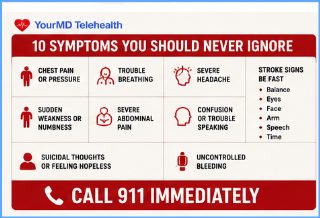

Most illnesses improve on their own with rest, hydration, and time. A sore throat, mild cold, or simple rash often resolves without serious complications. However, certain symptoms can signal a potentially life-threatening condition that requires immediate medical attention.
One of the most important parts of practicing medicine is recognizing when a symptom is more than just an inconvenience. While telehealth is an excellent option for many common medical concerns, some situations require urgent evaluation in a clinic or emergency department. This guide reviews ten symptoms that should never be ignored.
1. Chest Pain
Chest pain should always be taken seriously. While many cases are caused by muscle strain, acid reflux, or anxiety, chest pain can also be the first sign of a heart attack. Seek emergency care immediately if chest pain is associated with pressure or tightness, pain radiating to the jaw, shoulder, or arm, shortness of breath, sweating, nausea, or lightheadedness. Do not attempt to diagnose chest pain online — call 911 immediately if you suspect a heart attack.
2. Difficulty Breathing
Shortness of breath has many causes, including asthma, pneumonia, pulmonary embolism, heart failure, and severe allergic reactions. If you are struggling to breathe, speaking only a few words at a time, or your lips appear blue, seek emergency attention immediately. Mild respiratory symptoms without severe distress may be appropriate for telehealth evaluation.
3. Signs of a Stroke
Every minute matters during a stroke. Remember BE FAST: Balance problems, Eyesight changes, Face drooping, Arm weakness, Speech difficulty, Time to call 911. Rapid treatment dramatically improves outcomes — never delay emergency evaluation because symptoms seem mild.
4. Severe Abdominal Pain
Mild stomach cramps are common; sudden, severe abdominal pain is not. Possible causes include appendicitis, gallbladder disease, bowel obstruction, pancreatitis, perforated ulcer, and ectopic pregnancy. Pain that wakes you from sleep, becomes progressively worse, or is associated with fever or persistent vomiting deserves prompt evaluation.
5. Persistent High Fever
Fever is part of the body’s normal response to infection. However, seek medical attention if fever is accompanied by confusion, stiff neck, severe headache, difficulty breathing, persistent vomiting, rash, or dehydration. Infants younger than three months with a fever should receive immediate evaluation.
6. Blood in Stool or Vomit
Blood should never be ignored. Seek prompt evaluation for bright red blood in stool, black tar-like stool, vomiting blood, or coffee-ground-appearing vomit. These may indicate bleeding somewhere in the digestive tract. (See our guide to diarrhea and when to seek care.)
7. Sudden Vision Loss
Any sudden change in vision requires urgent evaluation — vision loss, double vision, sudden flashes of light, or a curtain-like shadow over one eye. Prompt treatment may preserve vision.
8. Severe Allergic Reactions
Anaphylaxis is a life-threatening allergic reaction. Symptoms include difficulty breathing, swelling of the tongue or throat, wheezing, hives over much of the body, dizziness, and fainting. If you have an epinephrine auto-injector, use it immediately and call 911.
9. Confusion or Loss of Consciousness
Sudden confusion may result from stroke, infection, low blood sugar, medication reactions, or head injury. Loss of consciousness always deserves immediate medical evaluation.
10. Rapidly Spreading Skin Infection
Most rashes are harmless. However, rapidly expanding redness, severe pain, fever, or swelling may indicate cellulitis or another serious skin infection. Early treatment helps prevent complications. (Not sure what your rash is? See What Does My Rash Look Like?)
When Telehealth Is the Right Choice
Many common medical concerns are well suited for telehealth, including urinary tract infections, yeast infections, seasonal allergies, sinus symptoms, migraine headaches, cold sores, acne, poison ivy, ringworm, pink eye, ear pain, birth control refills, and medication refills. Telehealth provides convenient access to physician-guided care while helping patients avoid unnecessary urgent care visits. See our full guide: what can be treated through telehealth.
When You Should Go to Urgent Care
Urgent care is often appropriate for minor cuts, sprains, ear pain, persistent fever, mild asthma flare-ups, minor burns, and suspected fractures. (See telehealth vs. urgent care.)
Frequently Asked Questions
Can telehealth tell me if I should go to the emergency room?
Yes. One of the most valuable aspects of telehealth is helping patients determine the safest next step based on their symptoms.
Should I wait to see if severe symptoms improve?
Not if they involve chest pain, stroke symptoms, severe breathing difficulty, or sudden neurological changes. Early treatment saves lives.
Is every fever dangerous?
No. Most fevers are caused by self-limited infections. The associated symptoms are often more important than the temperature itself.
Can anxiety cause chest pain?
Yes. However, chest pain should never be assumed to be anxiety until serious causes have been excluded.
How YourMD Telehealth Can Help
At YourMD Telehealth, our goal is not simply to prescribe medication — it is to help patients receive the right care at the right time. Many common illnesses can be evaluated safely through telehealth, saving you time, travel, and unnecessary urgent care visits. Just as importantly, when your symptoms suggest a medical emergency or require an in-person examination, we will tell you promptly and explain why. Adults in Nevada, Washington, Oregon, and Wisconsin can choose secure messaging ($20), live physician chat ($20), phone consultation ($40), or video consultation ($50). A new patient’s first consultation is $60; the visit prices above apply to established patients.
References
- American Heart Association. Heart Attack Warning Signs.
- American Stroke Association. Recognizing Stroke (BE FAST).
- American College of Emergency Physicians. When to Go to the Emergency Department.
- Centers for Disease Control and Prevention. Recognizing Emergency Warning Signs.
- American College of Physicians. Evaluation of Common Medical Emergencies in Primary Care.
This article is for general educational purposes and is not a substitute for individualized medical advice or emergency care. If you think you may be having a medical emergency, call 911. Services currently available to adults 18+ in Nevada, Washington, Oregon, and Wisconsin.