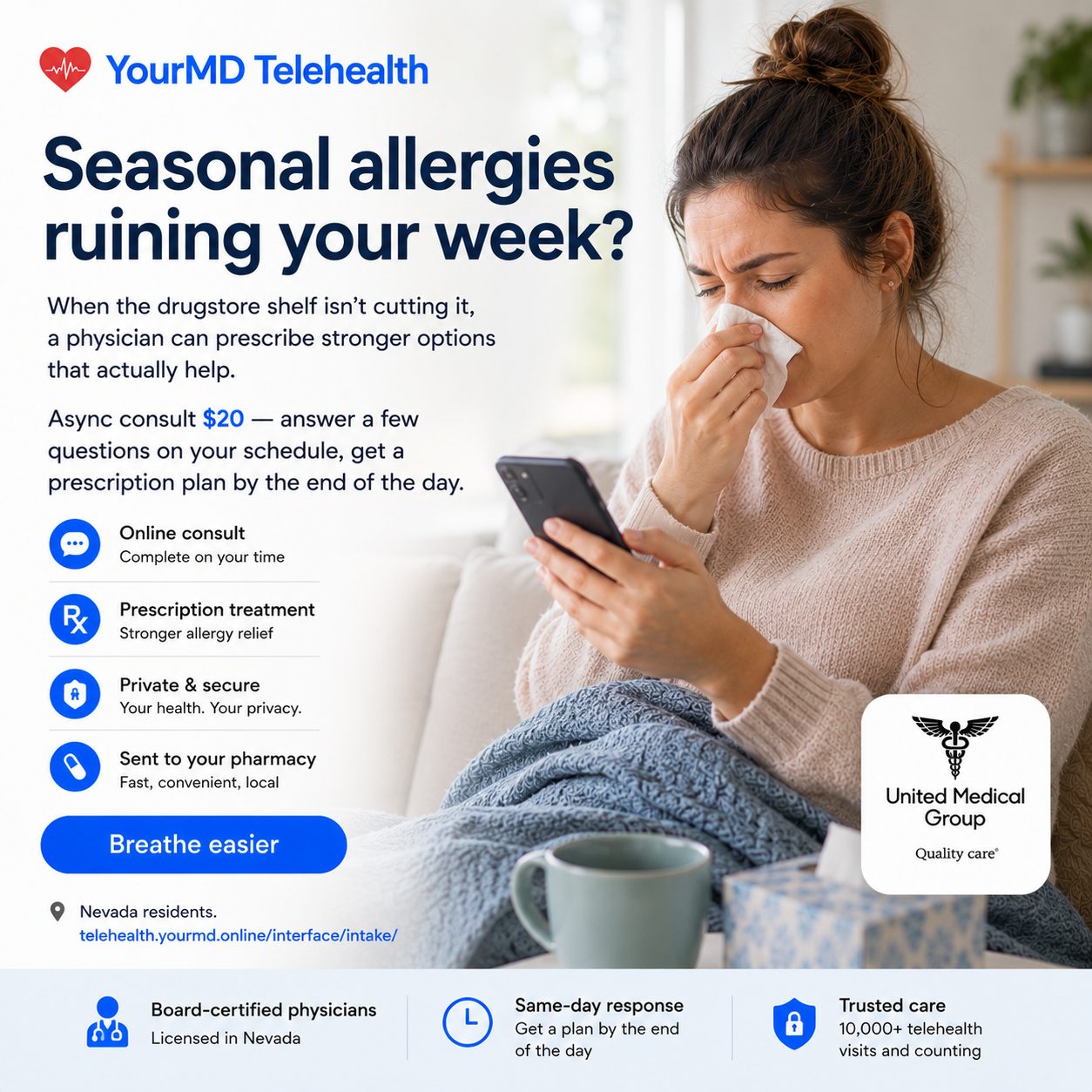

Spring flowers, green lawns, and changing seasons are beautiful for many people. For others, they signal weeks or even months of sneezing, itchy eyes, congestion, and constant fatigue. Seasonal allergies affect millions of Americans every year, making simple activities like working outdoors, exercising, or even sleeping through the night more difficult.
Many people try several over-the-counter medications before seeking care. While these can be effective, they do not work equally well for everyone. If your allergies are interfering with your daily life, it may be time to discuss additional treatment options with a physician. Telehealth offers a convenient way to review your symptoms, determine whether allergies are the cause, and develop an individualized treatment plan without leaving home.
What Are Seasonal Allergies?
Seasonal allergies, also known as seasonal allergic rhinitis or hay fever, occur when your immune system overreacts to harmless substances in the environment — commonly tree pollen, grass pollen, weed pollen, and mold spores. When these allergens enter the nose or eyes, the immune system releases histamine and other inflammatory chemicals, producing the familiar symptoms of allergy season. According to the American College of Allergy, Asthma & Immunology, allergic rhinitis affects approximately one in four adults in the United States.
Common Symptoms
- Frequent sneezing and runny nose
- Nasal congestion
- Itchy nose and throat
- Watery, red, or itchy eyes
- Postnasal drip and mild cough
- Fatigue from poor sleep
Allergies or a Cold?
| Seasonal Allergies | Common Cold |
|---|---|
| Itchy eyes are common | Itchy eyes are uncommon |
| Symptoms last weeks | Usually resolves within 7–10 days |
| No fever | Fever may occur |
| Triggered by pollen exposure | Caused by viral infection |
| Clear nasal drainage | Drainage may thicken over time |
If symptoms occur around the same time every year, allergies become much more likely.
Can Allergies Affect More Than Your Nose?
Absolutely. Untreated allergies may contribute to poor sleep, difficulty concentrating, reduced work productivity, fatigue, worsening asthma, frequent sinus infections, and ear pressure. Many patients notice improvements in sleep quality and daytime energy once allergy symptoms are adequately controlled.
The Best Treatments for Seasonal Allergies
Avoiding allergens: keep windows closed during high pollen days, shower after spending time outdoors, change clothing after yard work, use high-efficiency air filters, and monitor local pollen counts.
Antihistamines: second-generation antihistamines (cetirizine, loratadine, fexofenadine) are generally preferred because they cause less drowsiness and work well for sneezing, itching, and runny nose.
Nasal steroid sprays: intranasal corticosteroids (fluticasone, budesonide, triamcinolone) are among the most effective treatments available and often provide better congestion relief than antihistamines alone. Maximum benefit usually occurs after several days of consistent use.
Prescription medications: if over-the-counter treatments are not providing enough relief, your physician may recommend prescription antihistamines, prescription nasal sprays, combination nasal medications, or leukotriene receptor antagonists in selected patients.
Allergy shots: patients with severe allergies that persist despite medication may benefit from allergen immunotherapy, which gradually trains the immune system to become less sensitive. Although highly effective for selected patients, allergy shots require evaluation by an allergy specialist.
When Telehealth Is Appropriate
Telehealth is an excellent option for patients experiencing uncomplicated seasonal allergies. Your physician will review your symptoms, how long they have been present, the seasonal pattern, current medications, previous treatments, asthma history, and medication allergies. If your symptoms are consistent with allergic rhinitis, treatment recommendations can often be made without an office visit. If symptoms suggest asthma, bacterial sinusitis, or another condition, additional evaluation may be recommended.
Frequently Asked Questions
Why don’t allergy medications work for me anymore?
Sometimes the medication is appropriate but is not being taken consistently or early enough in the allergy season. In other cases, a different medication or combination therapy may be needed.
Can allergies cause headaches?
Yes. Nasal congestion and sinus pressure associated with allergies can contribute to headaches.
Do I need antibiotics?
No. Seasonal allergies are caused by an immune response, not a bacterial infection. Antibiotics do not improve allergy symptoms.
Is it safe to use nasal steroid sprays every day?
For most adults, modern intranasal corticosteroids are safe when used as directed. Your physician can help determine the best treatment plan for your situation.
How YourMD Telehealth Can Help
If allergy season has become something you simply “put up with,” it may be time to explore more effective treatment options. With YourMD Telehealth, adults in Nevada, Washington, Oregon, and Wisconsin can consult with a board-certified physician without leaving home. When appropriate after your medical evaluation, secure asynchronous consultations start at $20, phone visits are $40, and video visits are $50, with prescription allergy medications sent electronically to your preferred pharmacy the same day. Our goal is to help you breathe easier, sleep better, and enjoy the seasons again. A new patient’s first consultation is $60; the visit prices above apply to established patients.
References
- Wallace DV, Dykewicz MS, Oppenheimer J, et al. The Diagnosis and Management of Rhinitis: An Updated Practice Parameter. Journal of Allergy and Clinical Immunology. 2020.
- American Academy of Allergy, Asthma & Immunology. Allergic Rhinitis (Hay Fever).
- American College of Allergy, Asthma & Immunology. Hay Fever (Seasonal Allergies).
- Seidman MD, Gurgel RK, Lin SY, et al. Clinical Practice Guideline: Allergic Rhinitis. Otolaryngology–Head and Neck Surgery. 2015.
- Bousquet J, Khaltaev N, et al. Allergic Rhinitis and its Impact on Asthma (ARIA) Guidelines. Allergy. 2008.
This article is for general educational purposes and is not a substitute for individualized medical advice. Prescriptions are provided only when a physician determines treatment is clinically appropriate. Services currently available to adults 18+ in Nevada, Washington, Oregon, and Wisconsin.