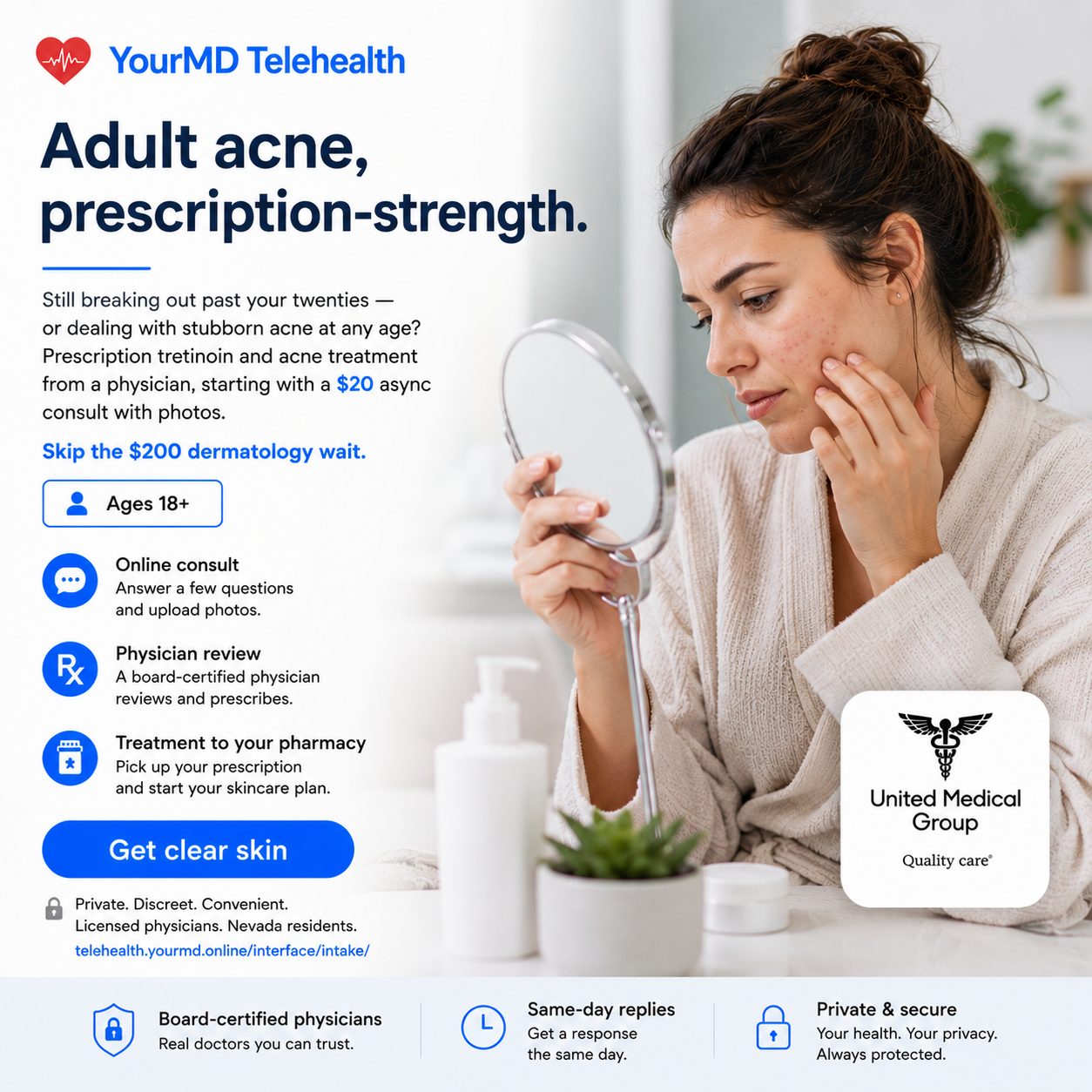

Many people expect acne to disappear after high school. Unfortunately, that is not always the case. Millions of adults continue to struggle with acne well into their twenties, thirties, forties, and beyond. For some, acne never completely goes away; others develop breakouts for the first time as adults.
Adult acne can affect confidence, professional interactions, and quality of life. It can also leave permanent scars if left untreated. Fortunately, today’s treatments are more effective than ever, and many patients can begin prescription therapy without waiting months for a dermatology appointment. For uncomplicated acne, telehealth provides a convenient way to have your skin evaluated, review photographs with a physician, and receive prescription treatment when appropriate.
What Is Acne?
Acne vulgaris is a chronic inflammatory skin condition involving the hair follicles and oil glands. It develops when several factors occur together: excess oil (sebum) production, blocked hair follicles, growth of Cutibacterium acnes bacteria, and inflammation within the skin. The combination produces blackheads, whiteheads, pimples, and sometimes deeper painful cysts. Acne is one of the most common medical conditions worldwide, affecting approximately 50 million Americans each year.
Why Adults Get Acne
Adult acne often has different causes than teenage acne. Hormonal changes remain one of the most common causes, particularly in women, with breakouts frequently occurring around menstrual cycles, pregnancy, perimenopause, or with polycystic ovary syndrome (PCOS). Genetics play a role — if your parents had persistent acne, your risk is higher. Cosmetics that are heavy or oily may clog pores; choosing non-comedogenic products can help. Stress does not directly cause acne but can worsen existing inflammation. Certain medications can contribute, including corticosteroids, testosterone therapy, lithium, and some antiseizure medications.
Different Types of Acne
- Comedonal acne — blackheads and whiteheads (non-inflammatory clogged pores).
- Inflammatory acne — red bumps, tender pimples, and pustules.
- Nodular or cystic acne — large painful nodules and deep cysts with increased risk of permanent scarring. This type often requires more aggressive treatment.
How Acne Is Diagnosed
Most acne can be diagnosed through history and visual examination. Telehealth works particularly well because physicians can evaluate high-quality photographs submitted securely before or during your consultation. Your physician may ask when your acne began, which areas are affected, which prescription treatments you have tried, what skincare products you use, whether breakouts worsen around your menstrual cycle, whether you have painful cysts, and whether you are pregnant or planning pregnancy.
Treatment Options
Topical retinoids: Prescription tretinoin remains one of the most effective first-line treatments for adult acne. It unclogs pores, prevents new acne, improves skin texture, reduces fine lines over time, and helps fade post-inflammatory discoloration. Tretinoin often requires six to twelve weeks before significant improvement becomes noticeable.
Benzoyl peroxide reduces acne-causing bacteria while helping prevent antibiotic resistance, and is frequently combined with prescription medications. Topical antibiotics such as clindamycin may be prescribed together with benzoyl peroxide for inflammatory acne; using topical antibiotics alone is generally discouraged because resistance may develop. Oral antibiotics are sometimes used for a limited period for moderate inflammatory acne while topical medications begin working. Hormonal therapy — combined oral contraceptives or spironolactone — can help certain women by reducing androgen activity.
What to Expect During Treatment
Many patients become discouraged because acne initially appears unchanged. In reality, improvement often begins after six weeks, maximum benefit may require three to four months, consistency is essential, and stopping treatment early often leads to recurrence. Patience is one of the most important parts of successful acne management.
Building a Healthy Skincare Routine
Prescription medication works best when combined with gentle skincare: wash your face twice daily with a gentle cleanser, avoid harsh scrubs, remove makeup before sleeping, use oil-free moisturizers, wear sunscreen every day, and avoid picking or squeezing pimples — picking lesions increases the likelihood of permanent scarring.
When Telehealth Is Appropriate
Telehealth is well suited for uncomplicated acne. Your physician reviews medical history, current medications, pregnancy status, previous treatments, allergies, and uploaded photographs. If prescription treatment is appropriate, medications can be electronically prescribed to your preferred pharmacy. Patients with severe cystic acne, extensive scarring, or lesions suspicious for another skin disorder may require referral to a dermatologist.
Frequently Asked Questions
Is adult acne common?
Yes. Adult acne affects millions of people and is especially common among women.
Is tretinoin better than over-the-counter retinol?
Prescription tretinoin is significantly stronger and has extensive clinical evidence demonstrating its effectiveness for acne treatment.
Can diet cause acne?
Research suggests that high-glycemic diets and certain dairy products may worsen acne in some individuals, although responses vary from person to person.
Will acne leave scars?
Inflammatory acne can cause permanent scarring. Early treatment reduces this risk.
How YourMD Telehealth Can Help
You should not have to wait months for a dermatology appointment to begin effective acne treatment. With YourMD Telehealth, adults aged 18 and older can complete a secure online consultation with a board-certified physician. When appropriate after reviewing your medical history and submitted photographs, secure asynchronous consultations start at $20, phone visits are $40, and video visits are $50, with prescription treatments such as tretinoin and other evidence-based acne medications sent electronically to your preferred pharmacy. If your acne requires specialty dermatology care, we will help guide you toward the appropriate next step. A new patient’s first consultation is $60; the visit prices above apply to established patients.
References
- American Academy of Dermatology. Guidelines of Care for the Management of Acne Vulgaris. Journal of the American Academy of Dermatology. 2024.
- Zaenglein AL, Pathy AL, Schlosser BJ, et al. Guidelines of Care for the Management of Acne Vulgaris. JAAD. 2016.
- Thiboutot D, Gollnick H, Bettoli V, et al. New Insights Into the Management of Acne. JAAD. 2009.
- American Academy of Dermatology. Acne: Diagnosis and Treatment.
- Tan JKL, Bhate K. A Global Perspective on the Epidemiology of Acne. British Journal of Dermatology. 2015.
This article is for general educational purposes and is not a substitute for individualized medical advice. Prescriptions are provided only when a physician determines treatment is clinically appropriate. Adult acne care through YourMD is available to adults 18+ in Nevada, Washington, Oregon, and Wisconsin.