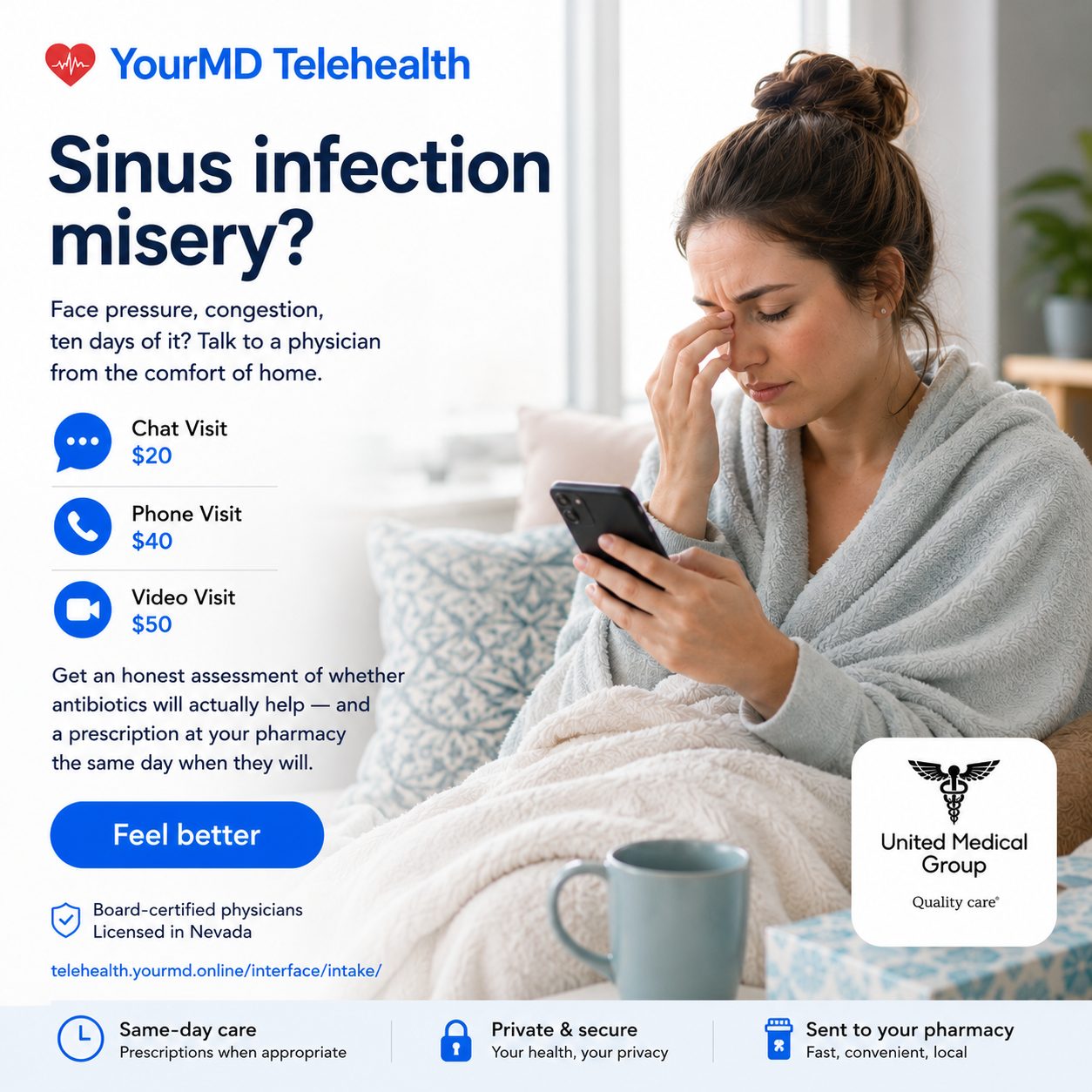

Almost everyone has experienced it. It starts with a runny nose and sore throat, progresses to nasal congestion and facial pressure, and after a week you’re wondering why you still feel miserable. Many people assume they need antibiotics, but the truth is more complicated.
Most sinus infections begin as viral upper respiratory infections that improve on their own. Only a small percentage become bacterial infections that benefit from antibiotics. Knowing the difference can help you avoid unnecessary medications while ensuring you receive treatment when it’s truly needed. For many uncomplicated cases, telehealth offers a convenient way to discuss your symptoms with a physician and receive treatment without spending hours in an urgent care waiting room.
What Is a Sinus Infection?
A sinus infection, also called acute rhinosinusitis, occurs when the tissue lining the sinuses becomes inflamed. The sinuses are air-filled spaces behind your forehead, cheeks, eyes, and nose. Normally mucus drains freely into the nasal passages; when inflammation blocks this drainage, mucus accumulates and symptoms develop. Most sinus infections are caused by viruses — the same viruses responsible for the common cold. A smaller number are caused by bacteria and may require antibiotic treatment.
Common Symptoms
- Nasal congestion
- Thick nasal drainage
- Facial pressure or pain
- Headache
- Reduced sense of smell
- Tooth pain, especially upper teeth
- Cough and sore throat from postnasal drainage
- Fatigue and mild fever
Viral vs. Bacterial Sinus Infections
One of the biggest misconceptions is that green or yellow mucus automatically means you need antibiotics. It does not. The color of nasal mucus changes as your immune system responds to infection and is not a reliable indicator of bacterial disease.
According to the Infectious Diseases Society of America (IDSA), bacterial sinusitis becomes more likely when one of three patterns occurs:
- Symptoms last more than 10 days without improvement.
- Symptoms improve, then suddenly worsen — you begin recovering from a cold, then several days later develop worsening congestion, fever, or facial pain (“double worsening”).
- Severe symptoms early — high fever (102°F or higher), thick nasal discharge, and significant facial pain lasting at least three to four consecutive days.
Why Antibiotics Aren’t Always the Answer
Antibiotics only work against bacteria. Taking antibiotics for viral infections provides no benefit and exposes patients to unnecessary risks, including allergic reactions, diarrhea, yeast infections, antibiotic-resistant bacteria, and Clostridioides difficile infection. One of the most important roles of a physician is deciding when antibiotics are appropriate and when supportive care is the better option.
How Sinus Infections Are Diagnosed
Most uncomplicated sinus infections are diagnosed based on symptoms and medical history. Your physician may ask how long symptoms have been present, whether symptoms improved before worsening, whether you have facial pain or fever, the color of nasal drainage, whether you have allergies or frequent sinus infections, and whether you smoke. Most patients do not need X-rays or CT scans for an uncomplicated sinus infection; imaging is generally reserved for chronic infections, recurrent disease, or suspected complications.
Treatment Options
Viral sinusitis: Most patients improve with supportive care — saline nasal irrigation, adequate hydration, rest, acetaminophen or ibuprofen for pain, intranasal corticosteroid sprays in appropriate patients, and humidified air. Symptoms often begin improving within seven to ten days.
Bacterial sinusitis: When bacterial infection is suspected, antibiotics may be recommended. The preferred first-line antibiotic for many adults is amoxicillin-clavulanate, although treatment depends on allergies, medical history, and local resistance patterns. Not everyone requires antibiotics immediately — in selected patients, careful observation may also be appropriate.
Allergies Can Mimic Sinus Infections
Seasonal allergies frequently produce nasal congestion, sneezing, facial pressure, clear drainage, and itchy eyes. Unlike bacterial sinus infections, allergies rarely cause fever and often improve with allergy medications rather than antibiotics. An accurate diagnosis helps avoid unnecessary treatment.
When Telehealth Works Well
Many uncomplicated sinus infections can be evaluated through telehealth. Your physician reviews the duration of symptoms, fever history, facial pain, nasal drainage, previous sinus infections, medication allergies, and chronic conditions. If your symptoms meet accepted criteria for bacterial sinusitis, antibiotics may be prescribed when clinically appropriate. If your symptoms are more consistent with a viral illness, your physician can recommend evidence-based supportive treatment and explain what warning signs should prompt further evaluation.
Frequently Asked Questions
Do green mucus and facial pressure mean I need antibiotics?
Not necessarily. Many viral infections produce thick colored mucus. The duration and pattern of symptoms are often more important than mucus color.
How long should I wait before seeing a doctor?
If symptoms persist longer than ten days without improvement, worsen after initially improving, or become severe with high fever and facial pain, medical evaluation is recommended.
Will antibiotics make me feel better faster?
Only if your illness is caused by bacteria. Antibiotics do not shorten viral colds.
Can telehealth diagnose a sinus infection?
Yes. Many uncomplicated sinus infections can be evaluated through telehealth using your symptom history and current clinical guidelines.
How YourMD Telehealth Can Help
If you’ve been dealing with persistent congestion, facial pressure, or symptoms that simply are not improving, you do not necessarily need to spend hours in an urgent care waiting room. With YourMD Telehealth, adults in Nevada, Washington, Oregon, and Wisconsin can consult with a board-certified physician from home. When appropriate after your medical evaluation, secure messaging visits start at $20, phone visits are $40, and video visits are $50, with prescriptions sent electronically to your preferred pharmacy the same day. Our goal is not simply to prescribe antibiotics — it is to provide an accurate diagnosis, recommend evidence-based treatment, and help you recover safely. A new patient’s first consultation is $60; the visit prices above apply to established patients.
References
- Chow AW, Benninger MS, Brook I, et al. IDSA Clinical Practice Guideline for Acute Bacterial Rhinosinusitis in Children and Adults. Clinical Infectious Diseases. 2012;54(8):e72-e112.
- Rosenfeld RM, Piccirillo JF, Chandrasekhar SS, et al. Clinical Practice Guideline (Update): Adult Sinusitis. Otolaryngology–Head and Neck Surgery. 2015;152(2 Suppl):S1-S39.
- American Academy of Family Physicians. Acute Rhinosinusitis in Adults.
- Centers for Disease Control and Prevention. Adult Outpatient Antibiotic Prescribing Guidelines.
- Infectious Diseases Society of America. Appropriate Antibiotic Use for Upper Respiratory Tract Infections.
This article is for general educational purposes and is not a substitute for individualized medical advice. Prescriptions are provided only when a physician determines treatment is clinically appropriate. Services currently available to adults 18+ in Nevada, Washington, Oregon, and Wisconsin.