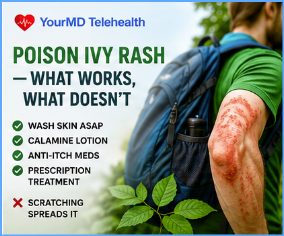

Few rashes are as frustrating as poison ivy. It often starts with a small itchy patch that seems harmless, only to spread into intensely itchy blisters over the next several days. Sleep becomes difficult, scratching becomes almost impossible to resist, and many people worry the rash is spreading because they keep touching it.
Fortunately, most poison ivy rashes are not dangerous, but they can be extremely uncomfortable. The good news is that many cases can be diagnosed through telehealth using your history and photographs, allowing treatment to begin without an unnecessary office visit.
What Is Poison Ivy?
Poison ivy is a skin reaction caused by urushiol, an oily resin found in poison ivy, poison oak, and poison sumac. Urushiol is one of the most potent natural skin allergens — even a tiny amount can trigger an allergic reaction in sensitive individuals. Contrary to popular belief, poison ivy is not contagious. The rash cannot spread from person to person by touching the blisters.
What Does Poison Ivy Look Like?
Symptoms usually begin 12 to 48 hours after exposure, although they may appear sooner in people who have had previous reactions. Common findings include intense itching, a red rash, small bumps, fluid-filled blisters, swelling, and linear streaks where the plant brushed against the skin. The rash often appears on the arms, legs, hands, face, and neck; areas exposed to more urushiol generally develop more severe reactions.
Why Does the Rash Keep “Spreading”?
This is one of the biggest myths about poison ivy. Many people believe the blister fluid spreads the rash. It does not. New areas appear later because different parts of the body absorbed different amounts of urushiol, thicker skin delays the reaction, and areas with less exposure develop symptoms later. Once the urushiol has been washed away, the rash cannot continue spreading from the blisters themselves.
How Do You Get Poison Ivy?
Direct contact with the plant is the most common cause. However, urushiol can also remain on gardening gloves, clothing, shoes, camping gear, pet fur, and yard tools — touching contaminated objects days later can still cause a rash. After outdoor activities, washing exposed skin and clothing promptly helps reduce the amount of urushiol absorbed.
Mild Poison Ivy Treatment
Small, localized rashes often improve with supportive care: cool compresses to reduce itching and inflammation, calamine lotion to dry oozing blisters, colloidal oatmeal baths to soothe irritated skin, and oral antihistamines such as diphenhydramine, which may help patients sleep despite itching (though they do not treat the reaction itself). Non-sedating antihistamines have limited benefit for poison ivy because histamine is not the primary driver of the rash.
When Prescription Treatment Is Needed
Some reactions become severe enough to require prescription medication — a rash covering a large area, significant swelling, facial or eyelid involvement, severe blistering, extensive itching that interferes with sleep, or a rash involving the hands or genitals. In these situations, physicians may prescribe corticosteroids. Short courses of oral steroids are commonly used for more extensive reactions, and treatment should be long enough to prevent rebound symptoms after the medication is stopped.
What You Should Not Do
Several home remedies may actually make poison ivy worse. Avoid bleach, gasoline, and alcohol directly on the rash, scratching until the skin breaks, and hot showers immediately after exposure. Scratching increases the risk of bacterial skin infection.
Can Telehealth Diagnose Poison Ivy?
In many cases, yes. Poison ivy has a very characteristic appearance, and combined with your history of outdoor exposure, secure photographs often provide enough information for a physician to make the diagnosis. Telehealth is particularly helpful for patients who recently worked outdoors, went hiking, garden frequently, or developed an itchy linear rash. If your symptoms suggest another condition, your physician may recommend an in-person evaluation.
Frequently Asked Questions
Can poison ivy spread by scratching?
No. Scratching does not spread poison ivy. It may, however, damage the skin and increase the risk of infection.
Should I pop the blisters?
No. Blisters protect healing skin and should be left intact whenever possible.
How long does poison ivy last?
Most mild cases improve within one to three weeks. More severe reactions may take longer.
Can I get poison ivy from my dog?
Not directly. However, urushiol can remain on your pet’s fur after outdoor exposure. Bathing pets that have been in wooded areas may reduce this risk.
How YourMD Telehealth Can Help
If you’ve developed an itchy rash after hiking, gardening, or yard work, you may not need an urgent care visit. With YourMD Telehealth, adults in Nevada, Washington, Oregon, and Wisconsin can upload photographs and consult with a board-certified physician from home. When appropriate after reviewing your symptoms and photographs, secure asynchronous consultations start at $20, phone consultations are $40, and video visits are $50, with prescription medications — including corticosteroids when clinically appropriate — sent electronically to your preferred pharmacy. If your rash appears infected or involves your eyes or airway, we will recommend immediate in-person evaluation. See also our guide to common skin rashes and what can be treated through telehealth. A new patient’s first consultation is $60; the visit prices above apply to established patients.
References
- American Academy of Dermatology. Poison Ivy, Oak, and Sumac: Diagnosis and Treatment.
- American Academy of Family Physicians. Diagnosis and Management of Contact Dermatitis.
- Gladman AC. Toxicodendron Dermatitis: Poison Ivy, Oak, and Sumac. Wilderness & Environmental Medicine. 2006;17(2):120-128.
- Mayo Clinic. Poison Ivy Rash: Symptoms and Causes.
- Centers for Disease Control and Prevention. Poisonous Plants Safety Information.
This article is for general educational purposes and is not a substitute for individualized medical advice. Prescriptions are provided only when a physician determines treatment is clinically appropriate. Services currently available to adults 18+ in Nevada, Washington, Oregon, and Wisconsin.