
Lower back pain is one of the most common reasons people miss work, limit physical activity, or seek medical care. Whether your discomfort began after lifting something heavy, sitting too long, or simply developed over time, gentle stretching can often be an important part of recovery.
Stretching won't cure every cause of back pain, but it can reduce muscle tension, improve flexibility, restore normal movement, and help you return to your daily activities. The key is to perform stretches slowly, gently, and consistently. Stretching should create a mild pulling sensation—not sharp or worsening pain.
This guide reviews ten stretches commonly recommended for people with uncomplicated lower back pain, along with tips for performing them safely.
When Can Stretching Help?
Stretching is often helpful for lower back pain related to muscle strains, muscle tightness, prolonged sitting, poor posture, mild age-related stiffness, recovery after an acute episode of back pain, and general flexibility and mobility. Stretching is usually most effective when combined with regular walking, strengthening exercises, and healthy daily movement habits.
When Should You Avoid Stretching?
Not every type of back pain improves with stretching. Stop and seek medical advice if stretching causes sharp or severe pain, increasing numbness, increasing weakness, loss of balance, or pain that rapidly worsens.
Stretching should also be postponed until you've been evaluated if you have recent major trauma, fever, unexplained weight loss, loss of bowel or bladder control, or numbness around the groin.
How to Stretch Safely
- Move slowly and never bounce during a stretch.
- Breathe normally.
- Stretch to mild tension—not pain.
- Hold each stretch for about 20–30 seconds unless otherwise instructed.
- Repeat each stretch two to four times if comfortable.
A short walk or a few minutes of gentle movement beforehand may help warm your muscles.
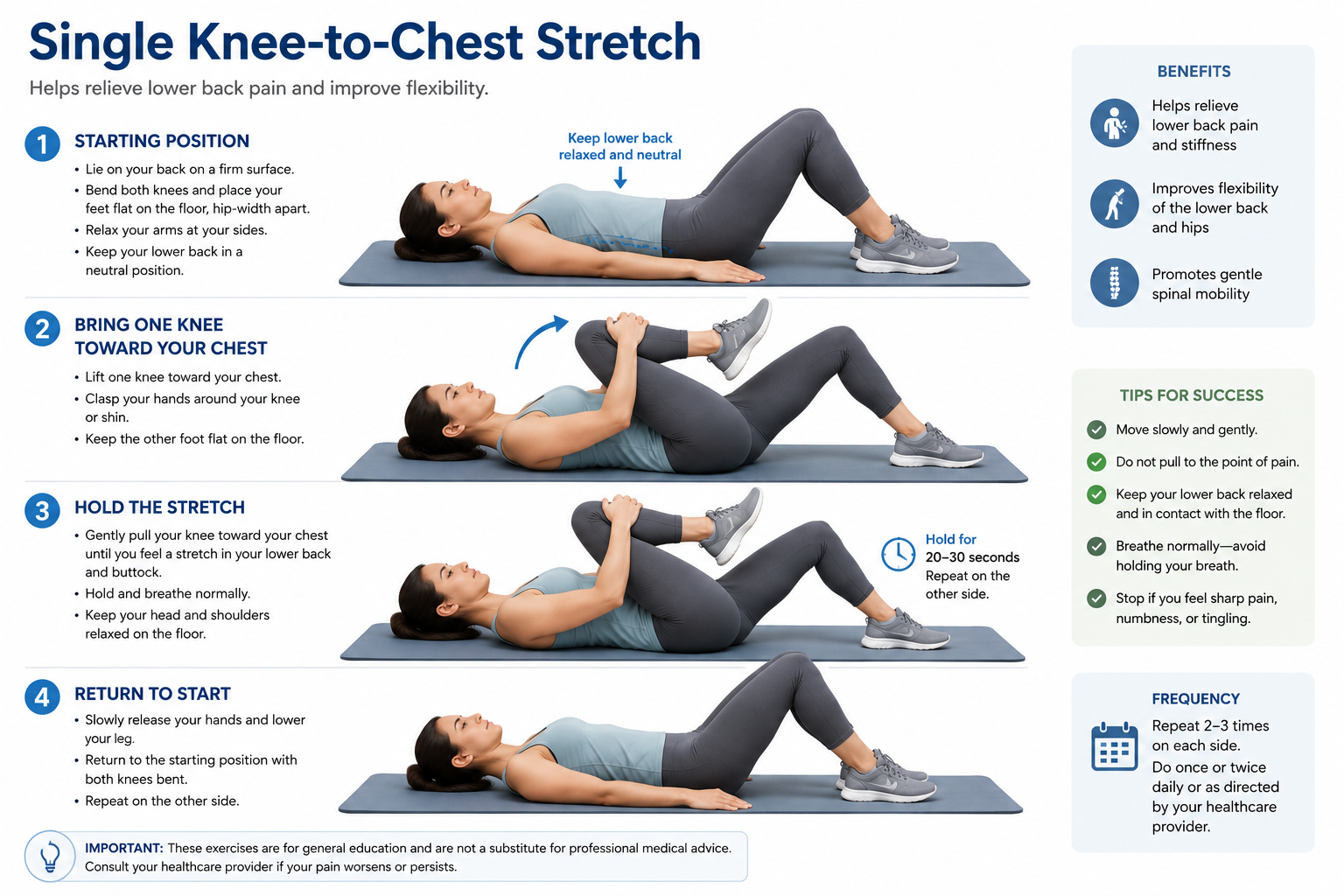
1. Single Knee-to-Chest Stretch
This stretch helps relax muscles in the lower back and hips. Lie on your back with both knees bent, keep one foot flat on the floor, bring the opposite knee toward your chest, hold your knee with both hands for 20–30 seconds, then lower and repeat on the other side.
It relieves lower back tightness, improves hip flexibility, and is gentle enough for many beginners. See the full step-by-step knee-to-chest guide.
2. Double Knee-to-Chest Stretch
This variation stretches both sides of the lower back simultaneously. Lie on your back, bring both knees toward your chest, wrap your arms around your legs, relax your shoulders, hold for 20–30 seconds, and slowly return your feet to the floor. It relaxes lumbar muscles, improves spinal flexibility, and reduces stiffness after prolonged sitting.
3. Cat-Cow Stretch
Cat-Cow improves spinal mobility through gentle, controlled movement. Begin on your hands and knees with hands below shoulders and knees below hips. Slowly round your back toward the ceiling (Cat), then gently lower your abdomen while lifting your chest (Cow). Continue slowly for 8–10 repetitions.
It improves spinal mobility, decreases stiffness, and warms up the back before exercise. Full technique in our Cat-Cow guide.
4. Child's Pose
Child's Pose gently stretches the lower back, hips, and shoulders. Kneel on the floor, sit back toward your heels, reach both arms forward, lower your chest comfortably, relax your neck, and hold for 20–30 seconds. It relaxes tight back muscles, lengthens the spine, and promotes relaxation. See the full Child's Pose guide.
5. Pelvic Tilt
Although often considered an exercise, the pelvic tilt also improves spinal mobility. Lie on your back with knees bent, tighten your abdominal muscles, flatten your lower back gently into the floor, hold for five seconds, relax, and repeat 10 times. It improves spinal control, reduces stiffness, and activates deep core muscles. Details in our pelvic tilt guide.
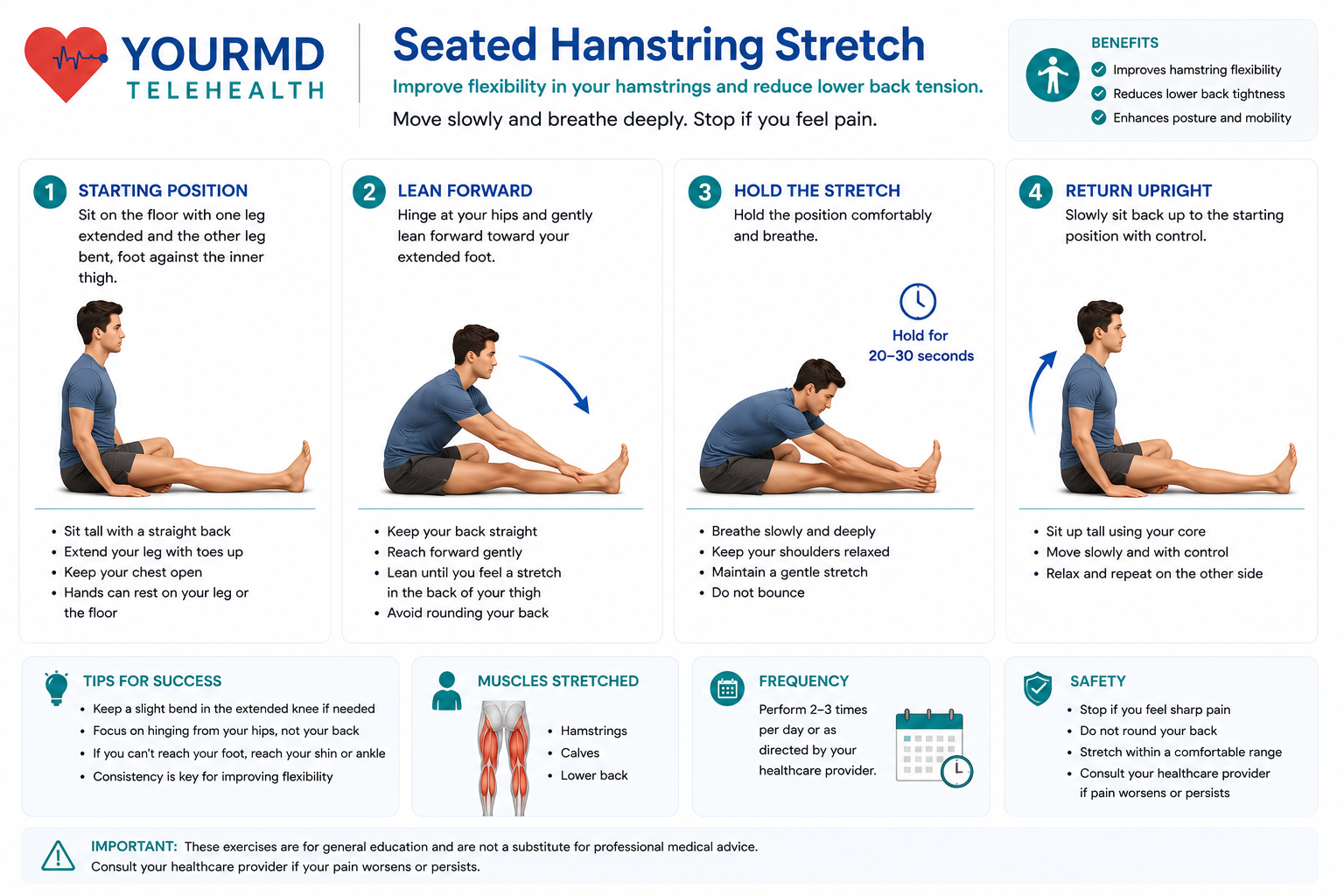
6. Seated Hamstring Stretch
Tight hamstrings can increase stress on the lower back. Sit with one leg extended and the opposite knee bent, keep your back straight, lean forward from your hips, stop when you feel a stretch behind the thigh, and hold for 20–30 seconds. It improves hamstring flexibility, reduces tension on the pelvis, and supports healthy posture.
7. Standing Lumbar Extension
This stretch may help some people whose pain worsens with prolonged sitting. Stand upright, place your hands on your lower back, gently lean backward, keep the movement comfortable, hold briefly, and return to standing. It encourages spinal extension, may reduce stiffness after prolonged sitting, and is easy to perform throughout the day. If this movement increases your leg pain, stop and discuss it with your healthcare provider. Full technique in the standing lumbar extension guide.
8. Prone Press-Up (McKenzie Extension)
This stretch is commonly recommended for some people with disc-related back pain. Lie on your stomach, place your hands beneath your shoulders, press through your hands, lift your chest while keeping your hips on the floor, hold briefly, and lower slowly.
This exercise is not appropriate for everyone. If your pain worsens or travels farther down your leg, stop the exercise and consult your healthcare provider. See the full prone press-up guide.
9. Figure-Four Stretch
The Figure-Four stretch targets the piriformis and muscles deep within the hip. Lie on your back with both knees bent, cross one ankle over the opposite knee, lift the supporting leg, hold behind the thigh, gently pull toward your chest, and hold for 20–30 seconds before switching sides. It improves hip mobility and reduces tension in the buttock muscles.
10. Lower Trunk Rotation
Gentle trunk rotations improve flexibility without placing excessive stress on the spine. Lie on your back, bend both knees, keep your shoulders flat on the floor, slowly lower both knees to one side, hold briefly, return to center, and repeat on the other side. It improves rotational mobility, relieves stiffness, and promotes gentle spinal movement.
How Often Should You Stretch?
For many people, stretching once or twice each day is a reasonable starting point. Consistency is more important than intensity: a routine that takes 10–15 minutes and is performed regularly is often more effective than occasional long stretching sessions.
Stretching Is Only Part of Recovery
Stretching alone rarely solves chronic lower back pain. The best long-term outcomes usually come from combining stretching with regular walking, core and hip strengthening, good posture, frequent movement breaks during the day, healthy sleep habits, and maintaining a healthy weight.
Frequently Asked Questions
Should stretching hurt?
No. A gentle pulling sensation is expected, but sharp or increasing pain is a sign to stop.
How long should I hold each stretch?
Most stretches are held for about 20–30 seconds. Slow, controlled breathing can help your muscles relax during the stretch.
Is it better to stretch in the morning or evening?
Either can be helpful. Morning stretching may reduce stiffness after sleeping, while evening stretching may relieve muscle tension after a day of activity. Choose the time you're most likely to be consistent.
Can stretching make back pain worse?
Yes. Stretching too aggressively or performing exercises that aren't appropriate for your condition can worsen symptoms. If a stretch consistently increases your pain, stop and seek medical advice.
When Should You Contact Your Healthcare Provider?
Contact your healthcare provider if your pain persists for more than a few weeks, stretching consistently makes your symptoms worse, pain begins radiating farther down your leg, you develop numbness, tingling, or weakness, or your pain interferes with work, sleep, or daily activities. A healthcare provider or physical therapist can help determine which stretches are most appropriate for your specific condition.
Seek Immediate Medical Care If
Seek emergency medical attention immediately if you experience loss of bowel or bladder control, numbness in the groin or saddle area, severe weakness in one or both legs, back pain after major trauma, fever, chills, or unexplained weight loss accompanied by back pain, or sudden severe back pain with abdominal pain, fainting, or dizziness.
The Bottom Line
Gentle stretching can be an effective part of recovering from uncomplicated lower back pain. Exercises such as the Knee-to-Chest Stretch, Cat-Cow, Child's Pose, Pelvic Tilt, and Lower Trunk Rotation may help improve flexibility, reduce muscle tension, and restore normal movement when performed correctly.
The most effective approach is to stretch consistently, avoid movements that increase your pain, and combine stretching with walking, strengthening exercises, and healthy daily habits. If your symptoms persist, worsen, or are accompanied by weakness, numbness, or other warning signs, seek medical evaluation to determine the underlying cause and the most appropriate treatment plan.