
The standing lumbar extension is a simple exercise that gently bends your lower back backward while standing. It is commonly recommended for people whose back pain worsens after prolonged sitting, driving, or repeated bending forward.
One of the biggest advantages of this exercise is that it can be performed almost anywhere. Whether you're at work, traveling, or spending long hours at a desk, standing lumbar extensions require no equipment and take less than a minute to complete.
Like the prone press-up (McKenzie extension), this exercise places the lumbar spine into extension. For some people, this movement reduces stiffness and improves mobility. However, it is not appropriate for every cause of back pain, so paying attention to how your symptoms respond is important.
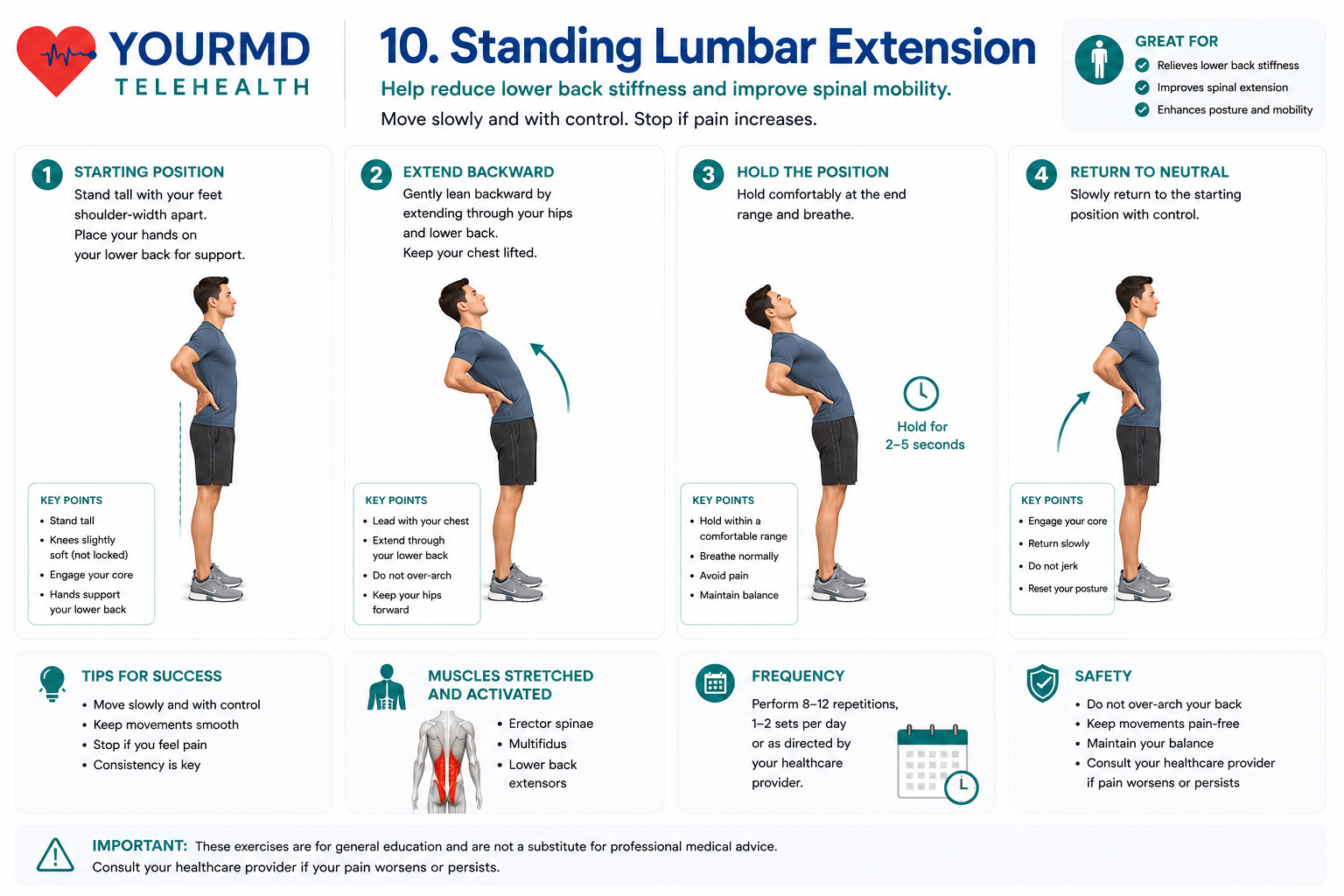
Benefits of Standing Lumbar Extension
When performed correctly, standing lumbar extensions may help reduce stiffness after prolonged sitting, improve lumbar spine mobility, encourage healthy posture, restore comfortable movement after bending forward, reduce muscle tightness, improve spinal flexibility, and provide a quick movement break during the workday. Many people find this exercise especially helpful after long periods of computer work or driving.
Who May Benefit?
Standing lumbar extensions may be helpful for people with mechanical lower back pain, pain that worsens after prolonged sitting, stiffness after desk work, mild loss of spinal extension, and early morning stiffness that improves with movement. It is frequently included in rehabilitation programs for office workers and others with sedentary jobs.
When Should You Avoid This Exercise?
Stop the exercise immediately if it causes sharp back pain, pain that spreads farther down your leg, increasing numbness, increasing weakness, loss of balance, or severe dizziness.
Seek medical advice before performing this exercise if you have a recent spinal fracture, recent spinal surgery without medical clearance, severe osteoporosis, significant spinal instability, loss of bowel or bladder control, or numbness around the groin or saddle area. If you have a specific spinal diagnosis, ask your healthcare provider or physical therapist whether extension exercises are appropriate for you.
Starting Position
- Stand with your feet about shoulder-width apart.
- Keep your knees relaxed—not locked.
- Stand tall with your shoulders relaxed.
- Place both hands on your lower back or hips for support.
- Tighten your abdominal muscles gently and look straight ahead.
Step-by-Step Instructions
Step 1: Support your lower back
Place both hands on the back of your pelvis or just above your hips. Your hands provide gentle support but should not push forcefully.
Step 2: Lean back slowly
Keeping your knees straight but relaxed, slowly lean your upper body backward. Allow the movement to come from your lower back and hips. Avoid sudden or jerking motions.
Step 3: Move within a comfortable range
Lean backward only until you feel a gentle stretch or mild pressure. Do not force the movement. Your goal is comfortable extension—not maximum flexibility.
Step 4: Hold briefly
Pause for 1 to 2 seconds. Continue breathing normally.
Step 5: Return to standing
Slowly return to an upright position and take a moment before repeating.
Step 6: Repeat
Perform 10 repetitions using slow, controlled movements. Many people perform this exercise several times throughout the day, particularly after long periods of sitting.
What Should You Feel?
You may notice mild stretching across the front of your hips or abdomen, gentle pressure in the lower back, and improved mobility after several repetitions. The exercise should not produce sharp pain or increasing leg symptoms.
Common Mistakes to Avoid
- Leaning too far back. You do not need to bend as far as possible — only move through a comfortable range.
- Bending your knees excessively. Your knees should remain relaxed but relatively straight.
- Moving too quickly. Quick movements may increase discomfort and reduce control.
- Looking straight up. Keep your neck in a comfortable position; avoid throwing your head backward.
- Ignoring worsening leg pain. If pain begins traveling farther down your leg, stop the exercise and seek medical advice.
Easier Modifications
Use a smaller range of motion: begin with only a slight backward lean and gradually increase the range if your symptoms improve. Use a countertop for support: lightly rest one hand on a stable countertop or sturdy chair if you feel unsteady.
Can Standing Lumbar Extensions Help Sciatica?
Sometimes. For some people with disc-related symptoms, extension exercises may encourage pain to move out of the leg and become more localized in the lower back. However, not every case of sciatica responds to extension exercises. If pain spreads farther down your leg, discontinue the exercise and contact your healthcare provider.
Can Older Adults Perform This Exercise?
Yes. Many older adults tolerate standing lumbar extensions well because they do not require getting onto the floor. If balance is a concern, perform the exercise near a stable surface for support.
Can I Do This at Work?
Absolutely. Standing lumbar extensions are particularly useful for people who spend much of the day sitting at a desk, driving, working at a computer, or traveling. Taking a brief movement break every 30 to 60 minutes may help reduce stiffness associated with prolonged sitting.
Frequently Asked Questions
How often should I perform this exercise?
Many people perform 10 repetitions every few hours during the day, especially after prolonged sitting. Your healthcare provider or physical therapist may recommend a different schedule based on your condition.
Should I feel pressure in my lower back?
A mild feeling of pressure or stretching may be normal. Sharp pain or worsening symptoms are not.
Is this exercise better than the prone press-up?
Both exercises promote spinal extension. Standing lumbar extensions are more convenient during the day because they can be performed almost anywhere, while prone press-ups typically allow a greater range of extension. Your healthcare provider or physical therapist can help determine which exercise is most appropriate for you.
Should I stop if my pain increases?
Yes. Stop immediately if your pain becomes sharper, spreads farther down your leg, or is accompanied by numbness or weakness.
When Should You Contact Your Healthcare Provider?
Contact your healthcare provider if the exercise consistently worsens your symptoms, pain spreads farther into your leg, you develop numbness or weakness, your symptoms interfere with normal daily activities, or you are unsure whether this exercise is appropriate for your condition.
Seek Immediate Medical Care If
Seek emergency medical attention immediately if you experience loss of bowel or bladder control, numbness around the groin or saddle area, significant weakness in one or both legs, severe back pain after major trauma, fever or chills accompanied by severe back pain, or sudden severe back pain with abdominal pain, dizziness, or fainting.
The Bottom Line
The standing lumbar extension is a convenient exercise that can help reduce stiffness, improve spinal mobility, and relieve discomfort for some people with mechanical lower back pain—particularly when symptoms worsen after prolonged sitting. Because it can be performed almost anywhere, it is an excellent option for incorporating regular movement breaks into your day.
Move slowly, stay within a comfortable range of motion, and pay close attention to how your symptoms respond. Combined with walking, stretching, and strengthening exercises, standing lumbar extensions can be a valuable part of a comprehensive back pain management plan.