
Child's Pose is a gentle stretching exercise that helps lengthen the muscles of the lower back while also stretching the hips, buttocks, and shoulders. It is commonly used in yoga, physical therapy, and rehabilitation programs because it promotes relaxation while improving flexibility and mobility.
Unlike more active strengthening exercises, Child's Pose focuses on slowly lengthening tight muscles and allowing your spine to rest in a comfortable position. For many people with uncomplicated lower back pain, it provides temporary relief from stiffness that develops after prolonged sitting, standing, or physical activity.
Although Child's Pose is appropriate for many people, it is not the best exercise for every type of back pain. The movement places the spine into a flexed (forward-bent) position, which may increase symptoms for some conditions.
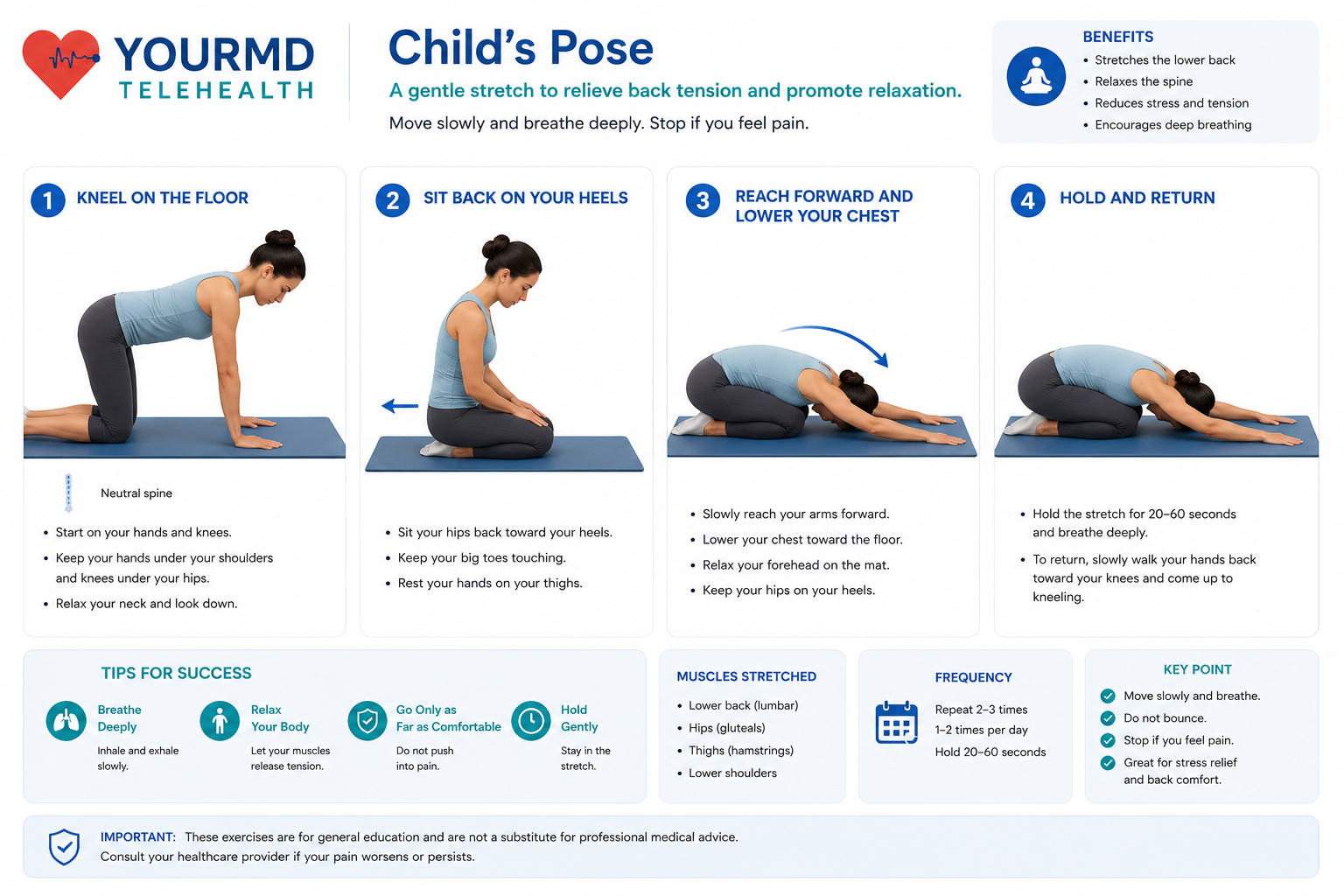
Benefits of Child's Pose
When performed correctly, Child's Pose may help stretch the muscles of the lower back, improve flexibility of the hips, reduce muscle tension, increase spinal mobility, stretch the shoulders and upper back, promote relaxation, improve body awareness, and complement a strengthening program for long-term back health. Many people also find that slow breathing during the stretch helps reduce stress and muscle guarding.
What Muscles Does Child's Pose Stretch?
Lower back muscles — the muscles alongside the lumbar spine gently lengthen as you reach forward. Gluteal muscles — stretched as your hips move toward your heels. Latissimus dorsi — the large muscles along the sides of your back lengthen as your arms reach forward. Shoulder muscles — gently stretch while your arms remain extended. Hip muscles — gradually become more flexible with regular practice.
Who May Benefit?
Child's Pose may be helpful for people with general lower back stiffness, muscle tightness, mild muscle strains, tight hips, sedentary lifestyles, recovery after prolonged sitting, and reduced flexibility. It is often used after strengthening exercises to improve flexibility and promote relaxation.
When Should You Avoid Child's Pose?
Stop the exercise and contact your healthcare provider if it causes sharp back pain, pain that radiates farther down your leg, increasing numbness, new weakness, or significant hip or knee pain.
Seek medical evaluation before performing this stretch if you have a recent spinal fracture, recent knee or hip surgery, loss of bowel or bladder control, numbness around the groin or saddle area, or severe back pain after major trauma. Because Child's Pose places your knees in a deeply bent position, people with significant knee arthritis or recent knee injuries may need to modify or avoid the exercise.
Equipment You'll Need
A yoga mat or exercise mat and comfortable clothing. Optional supports include a folded blanket beneath your knees, a pillow between your hips and heels, and a yoga bolster beneath your chest — these can make the stretch more comfortable if you have limited flexibility.
Step-by-Step Instructions
- Kneel on a comfortable surface and sit back toward your heels as far as comfortable. Many people find the stretch more comfortable with knees slightly wider than hip-width apart.
- Lower your upper body by leaning forward from your hips, allowing your chest to move toward the floor. Move only as far as feels comfortable.
- Reach forward with both arms, extending gently through your fingertips without forcing the stretch. Keep your shoulders relaxed.
- Rest your forehead on the mat if comfortable. If it doesn't reach the floor, place a folded towel or pillow beneath it.
- Relax into the stretch, allowing your hips to move toward your heels. You should feel a gentle stretch through your lower back, hips, buttocks, and shoulders. Avoid forcing your body into a deeper position.
- Hold for 20 to 30 seconds with slow, relaxed breathing. As your muscles relax, you may naturally sink a little deeper into the stretch.
- Return slowly by walking your hands back toward your knees and lifting your chest. Repeat 2 to 4 times if comfortable.
Breathing During the Stretch
Inhale slowly through your nose, exhale gently through your mouth, and allow your ribs and lower back to expand with each breath. Avoid holding your breath — slow breathing helps your muscles relax.
Common Mistakes to Avoid
- Forcing your hips to your heels. Not everyone's hips will comfortably reach — stretch only to a comfortable position.
- Reaching too aggressively. Overreaching may create unnecessary tension in your shoulders.
- Holding your breath.
- Ignoring knee pain. If your knees become painful, stop. Padding beneath your knees or a pillow between your hips and heels may improve comfort.
- Bouncing. Hold a steady position and allow your muscles to relax naturally.
Easier Modifications
Widen your knees to create more space for your hips and abdomen. Use a pillow or yoga bolster beneath your chest for support. Place a blanket behind your knees to reduce knee bending. Perform a shorter hold — begin with 10–15 seconds and gradually increase as your flexibility improves.
More Challenging Progressions
Side reach: walk both hands to one side to increase the stretch along the opposite side of your back; repeat on both sides. Thread the Needle: from a hands-and-knees position, slide one arm beneath the other to gently stretch the upper back and shoulders — this movement emphasizes the thoracic spine more than the lower back.
Can Child's Pose Help Sciatica?
Sometimes. If muscle tightness contributes to your symptoms, Child's Pose may feel beneficial. However, because it places the spine into flexion, it may increase symptoms in some people with disc-related pain or certain types of sciatica. If pain travels farther down your leg during the stretch, stop the exercise and discuss your symptoms with your healthcare provider.
Can Older Adults Perform Child's Pose?
Yes, but modifications are often helpful. Using pillows, yoga blocks, or a chair for support allows many older adults to perform a comfortable version of the stretch without excessive strain on the knees or hips.
Can You Perform Child's Pose During Pregnancy?
As pregnancy progresses, traditional Child's Pose may become uncomfortable because of pressure on the abdomen. Many pregnant individuals perform a modified version with the knees placed wider apart to create more room. Always discuss new exercise routines with your obstetric healthcare provider during pregnancy.
Frequently Asked Questions
How long should I hold Child's Pose?
Most people benefit from holding the stretch for 20 to 30 seconds. Longer holds may be appropriate if they remain comfortable.
Should Child's Pose hurt?
No. You should feel a gentle stretch—not sharp or worsening pain.
Can I do Child's Pose every day?
Yes. Many people include Child's Pose in their daily stretching routine.
What if my forehead doesn't reach the floor?
That's completely normal. Place a folded towel, pillow, or yoga block beneath your forehead for support.
When Should You Contact Your Healthcare Provider?
Contact your healthcare provider if Child's Pose consistently worsens your pain, pain spreads farther down your leg, you develop numbness or weakness, your symptoms interfere with normal daily activities, or you're unsure whether this stretch is appropriate for your condition.
Seek Immediate Medical Care If
Seek emergency medical attention immediately if you experience loss of bowel or bladder control, numbness around the groin or saddle area, significant weakness in one or both legs, severe back pain after major trauma, fever or chills accompanied by severe back pain, or sudden severe back pain with abdominal pain, dizziness, or fainting.
The Bottom Line
Child's Pose is a gentle stretch that can improve flexibility, reduce muscle tension, and provide temporary relief from lower back stiffness for many people. It is easy to modify, requires no equipment, and pairs well with strengthening exercises such as the Bird Dog, Glute Bridge, and Pelvic Tilt.
Stretch only to a comfortable position, breathe slowly, and avoid forcing the movement. If the stretch causes worsening pain, numbness, weakness, or symptoms that travel farther down your leg, stop the exercise and consult your healthcare provider or physical therapist.