
The Cat-Cow stretch is one of the most effective and widely recommended mobility exercises for the spine. Unlike stretches that focus on holding a position, the Cat-Cow stretch gently moves your spine through a comfortable range of motion, helping improve flexibility, reduce stiffness, and increase awareness of healthy spinal movement.
Because it's easy to learn and requires no equipment, Cat-Cow is commonly included in physical therapy programs, yoga classes, and home exercise routines for people with uncomplicated lower back pain. While it won't treat every cause of back pain, it can be an excellent way to improve mobility and prepare your body for strengthening exercises.
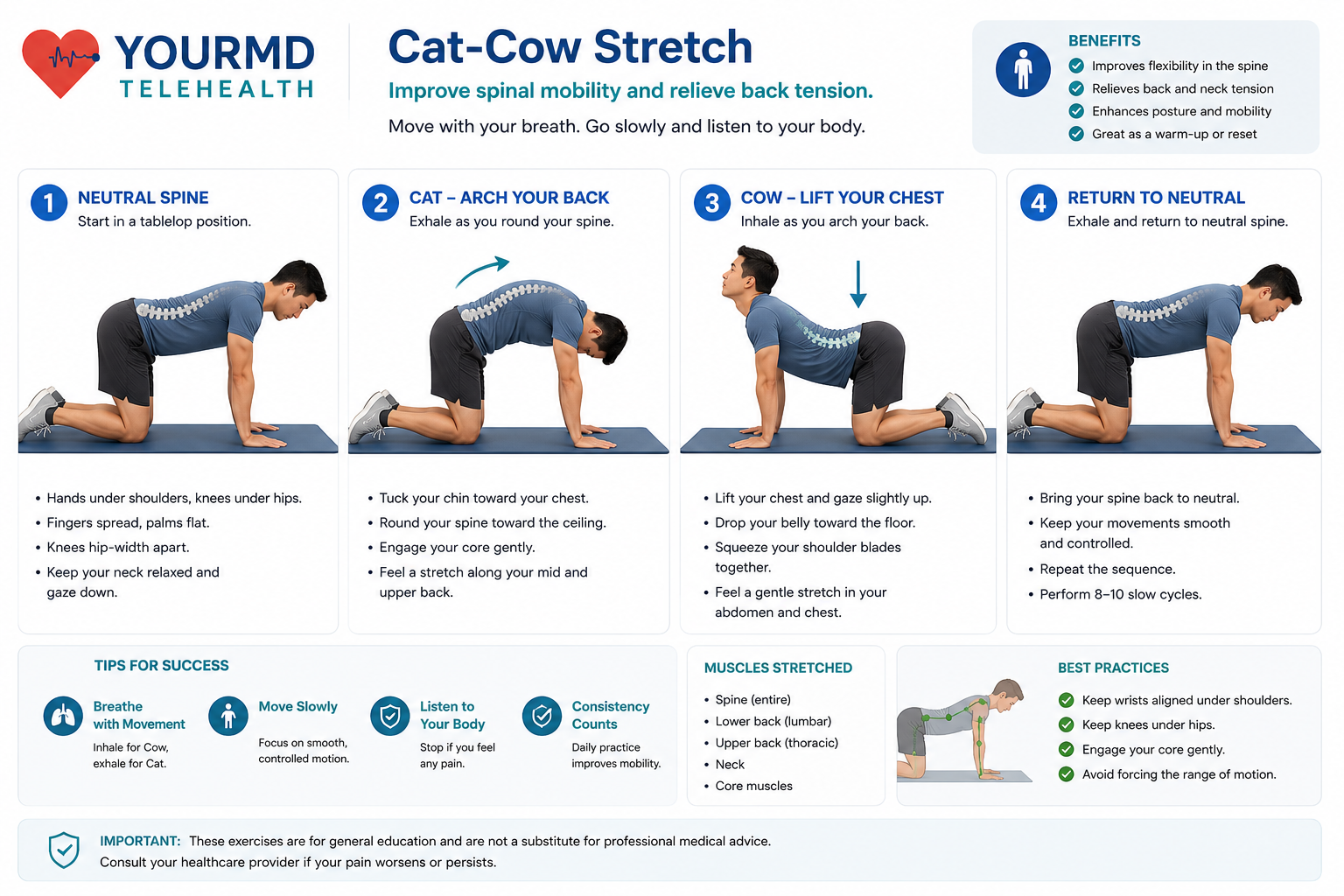
Benefits of the Cat-Cow Stretch
When performed correctly, the Cat-Cow stretch may help improve spinal mobility, reduce stiffness in the lower and middle back, increase flexibility, improve posture awareness, warm up the muscles before exercise, reduce muscle tension after prolonged sitting, and improve coordination between breathing and movement.
Because the movement is slow and controlled, it's also a good exercise for reconnecting with normal spinal movement after an episode of back pain.
How Does the Cat-Cow Stretch Work?
Your spine naturally moves in several directions: forward bending (flexion), backward bending (extension), side bending, and rotation. The Cat-Cow stretch gently guides the spine through flexion and extension while minimizing stress on the joints. Rather than forcing a stretch, the goal is smooth, comfortable movement.
Who May Benefit?
The Cat-Cow stretch is commonly recommended for people with mild lower back pain, morning stiffness, tight back muscles, prolonged sitting during the workday, mild arthritis-related stiffness, and general loss of flexibility. Many people also use Cat-Cow as part of a warm-up before walking, strength training, or yoga.
When Should You Avoid This Exercise?
Stop the exercise and contact your healthcare provider if it causes sharp pain, pain that rapidly worsens, increasing numbness, new weakness, loss of balance, or severe dizziness.
Seek medical evaluation before beginning if you have a recent spinal fracture, recent spinal surgery without clearance, severe osteoporosis with new pain, fever with back pain, loss of bowel or bladder control, or numbness around the groin or saddle area.
Starting Position
- Begin on your hands and knees.
- Position your hands directly below your shoulders.
- Place your knees beneath your hips.
- Spread your fingers comfortably.
- Keep your neck relaxed and look toward the floor.
Your back should be in a neutral position—not arched or rounded. If kneeling is uncomfortable, placing a folded towel beneath your knees can provide extra cushioning.
Step-by-Step Instructions
Step 1: Find a neutral spine
Before beginning the movement, take a slow breath and allow your spine to settle into a comfortable neutral position. Avoid locking your elbows or shrugging your shoulders.
Step 2: Move into Cat
As you slowly exhale, tighten your abdominal muscles, gently round your back toward the ceiling, allow your head to lower comfortably, and let your shoulder blades separate slightly. Imagine creating a gentle arch like a stretching cat. Do not force the movement.
Step 3: Hold briefly
Pause for one or two seconds. You should feel a gentle stretch through your back—not pain. Continue breathing normally.
Step 4: Move into Cow
As you inhale, slowly lower your abdomen toward the floor, lift your chest slightly, allow your tailbone to tilt upward, and look slightly forward without forcing your neck backward. Your movement should remain comfortable throughout the entire range.
Step 5: Continue slowly
Move back and forth between Cat and Cow in a slow, controlled rhythm. Complete 8 to 10 repetitions. Avoid rushing through the movement.
How Often Should You Do Cat-Cow?
For most people: one or two sessions daily, eight to ten repetitions per session, with slow, controlled movements. Cat-Cow can also be used as part of a warm-up before strengthening exercises.
Common Mistakes to Avoid
- Moving too quickly. The biggest benefit comes from slow, controlled movement.
- Forcing the stretch. Your spine should move only through a comfortable range.
- Holding your breath. Generally, inhale during Cow and exhale during Cat.
- Shrugging your shoulders or pushing excessively into your hands.
- Locking your elbows. Maintain a gentle bend if needed.
- Hyperextending your neck. When looking forward during Cow, avoid throwing your head backward.
Can Cat-Cow Help Sciatica?
Sometimes. If your symptoms are related to muscle stiffness or reduced spinal mobility, Cat-Cow may feel helpful. However, if the exercise causes pain to travel farther down your leg or significantly increases numbness or tingling, stop the exercise and discuss your symptoms with your healthcare provider. Sciatica can have many different causes, and not every exercise is appropriate for every person.
Can Older Adults Perform Cat-Cow?
Yes. Many older adults benefit from the gentle spinal movement. If kneeling is uncomfortable, modifications may include extra padding beneath the knees, fewer repetitions, or working within a smaller range of motion. A physical therapist can recommend additional modifications if needed.
Can You Do Cat-Cow During Pregnancy?
Cat-Cow is commonly included in prenatal exercise programs because it gently mobilizes the spine without requiring prolonged time lying flat on the back. However, every pregnancy is different. If you are pregnant, ask your obstetric healthcare provider before beginning any new exercise program, and stop immediately if you experience contractions, vaginal bleeding, dizziness, leaking fluid, or other concerning symptoms.
Progressing Your Routine
As your mobility improves, Cat-Cow works well alongside exercises such as the Knee-to-Chest Stretch, Pelvic Tilt, Bird Dog, Glute Bridge, Dead Bug, and walking. Combining mobility and strengthening exercises provides more comprehensive support for long-term spine health.
Frequently Asked Questions
How many repetitions should I do?
Most people begin with 8 to 10 slow repetitions. As your comfort improves, you may perform additional repetitions if recommended by your healthcare provider or physical therapist.
Should Cat-Cow hurt?
No. You should feel gentle movement and mild stretching. Stop if you experience sharp pain or worsening symptoms.
Is Cat-Cow better than stretching?
Cat-Cow is different from traditional stretching. Instead of holding a stretch, it improves spinal mobility through controlled movement. Both mobility exercises and static stretches can play important roles in managing back pain.
Can I do Cat-Cow every day?
Yes. Many people perform Cat-Cow daily to reduce stiffness and maintain spinal flexibility.
Is Cat-Cow good before exercise?
Yes. Because it gently warms up the spine, Cat-Cow is commonly performed before walking, strength training, or other physical activities.
When Should You Contact Your Healthcare Provider?
Contact your healthcare provider if Cat-Cow consistently worsens your pain, you develop numbness or tingling, pain spreads farther down your leg, your symptoms continue for several weeks, or you are unsure whether this exercise is appropriate for your condition.
Seek Immediate Medical Care If
Seek emergency medical attention immediately if you experience loss of bowel or bladder control, numbness around the groin or saddle area, significant weakness in one or both legs, severe back pain after major trauma, fever or chills with severe back pain, or sudden severe back pain with abdominal pain, dizziness, or fainting.
The Bottom Line
The Cat-Cow stretch is a simple, gentle exercise that improves spinal mobility and helps reduce stiffness in many people with uncomplicated lower back pain. By moving the spine through a slow, controlled range of motion, it encourages flexibility, improves posture awareness, and prepares your back for strengthening exercises.
Focus on smooth movement rather than stretching as far as possible. Pairing Cat-Cow with walking, core strengthening, and healthy movement habits offers a well-rounded approach to maintaining a healthy back.