
The knee-to-chest stretch is one of the simplest and most commonly recommended stretches for lower back pain. It gently stretches the muscles of the lower back, hips, and buttocks while encouraging your spine to move through a comfortable range of motion.
Because it requires no special equipment and can be performed on a bed, yoga mat, or carpeted floor, it's an excellent exercise for beginners and is often included in home exercise programs and physical therapy plans.
While the knee-to-chest stretch won't treat every cause of back pain, it can help reduce muscle tightness and improve flexibility for many people with uncomplicated lower back pain.
Benefits of the Knee-to-Chest Stretch
When performed correctly, this stretch may help reduce lower back muscle tightness, improve flexibility in the hips and lower back, decrease stiffness after sitting for long periods, improve spinal mobility, reduce muscle tension after exercise, encourage gentle movement during recovery, and prepare the body for strengthening exercises.
Many people also find this stretch relaxing, especially when combined with slow, controlled breathing.
Who May Benefit?
The knee-to-chest stretch is commonly recommended for people with mild lower back muscle strain, general back stiffness, tight hip muscles, morning stiffness, reduced flexibility, and recovery after prolonged sitting. It is often used as part of a broader rehabilitation program that includes walking, strengthening exercises, and posture training.
When Should You Avoid This Stretch?
Do not perform it—or stop the exercise and contact your healthcare provider—if it causes sharp or severe back pain, pain that rapidly worsens, increasing numbness, increasing leg weakness, loss of balance, or new pain after a significant injury.
Seek medical evaluation before beginning stretching if you have a recent fracture, recent spinal surgery without clearance, severe osteoporosis with new back pain, fever associated with back pain, unexplained weight loss, loss of bowel or bladder control, or numbness around the groin or inner thighs.
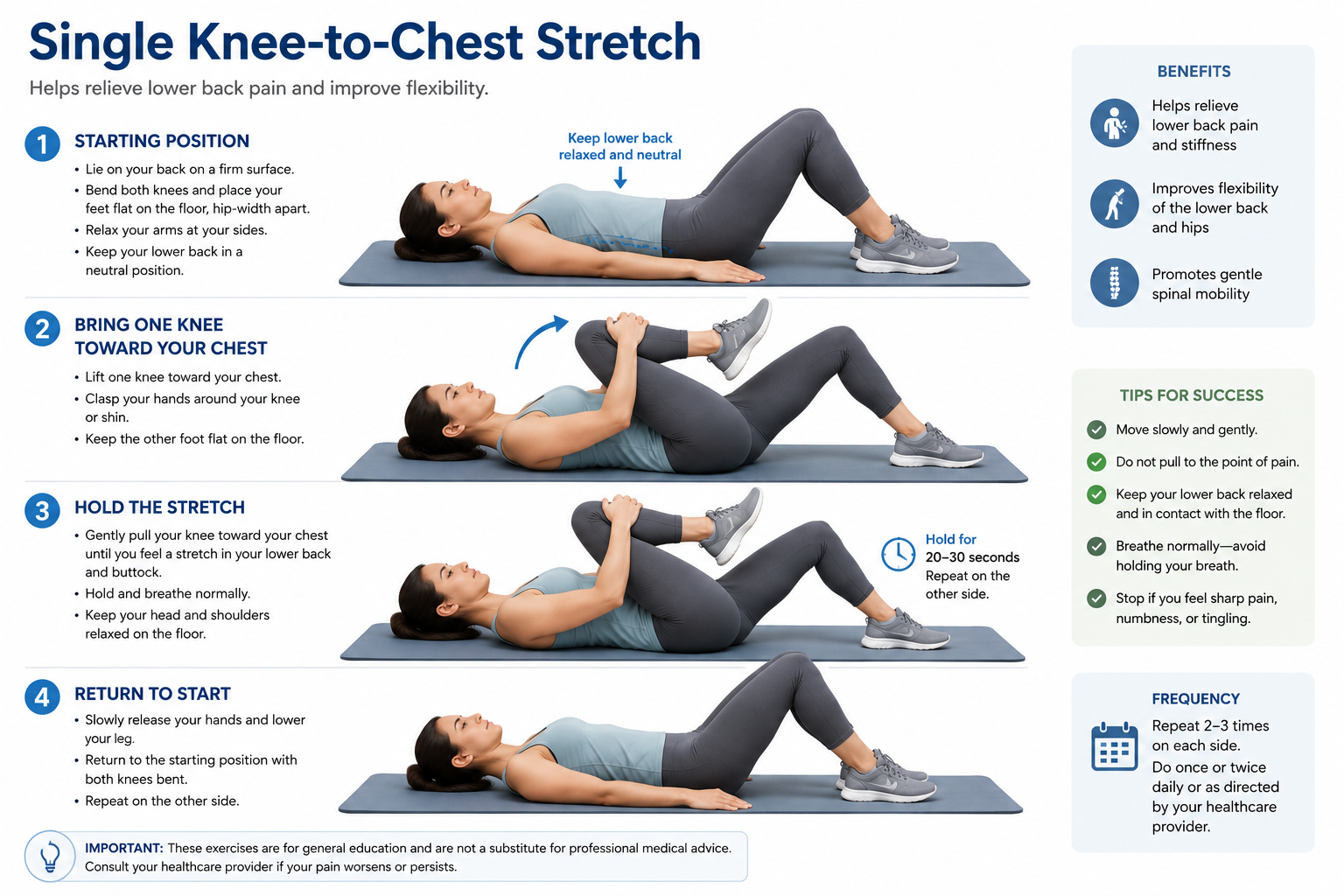
Starting Position
- Lie comfortably on your back.
- Bend both knees.
- Place both feet flat on the floor.
- Relax your shoulders and keep your neck comfortable.
- Allow your breathing to slow.
Avoid arching your lower back excessively before beginning the stretch.
How to Perform the Single Knee-to-Chest Stretch
- Lift one foot off the floor, keeping the opposite foot planted with the knee bent.
- Bring the raised knee gently toward your chest, using both hands to hold the front of your shin or the back of your thigh. Avoid pulling directly on the kneecap.
- Pull only until you feel a gentle stretch in your lower back, hip, and buttock. The stretch should never be painful.
- Hold for 20 to 30 seconds while breathing normally.
- Slowly return your foot to the floor and repeat on the opposite side.
- Complete 2 to 4 repetitions per side, depending on your comfort level.
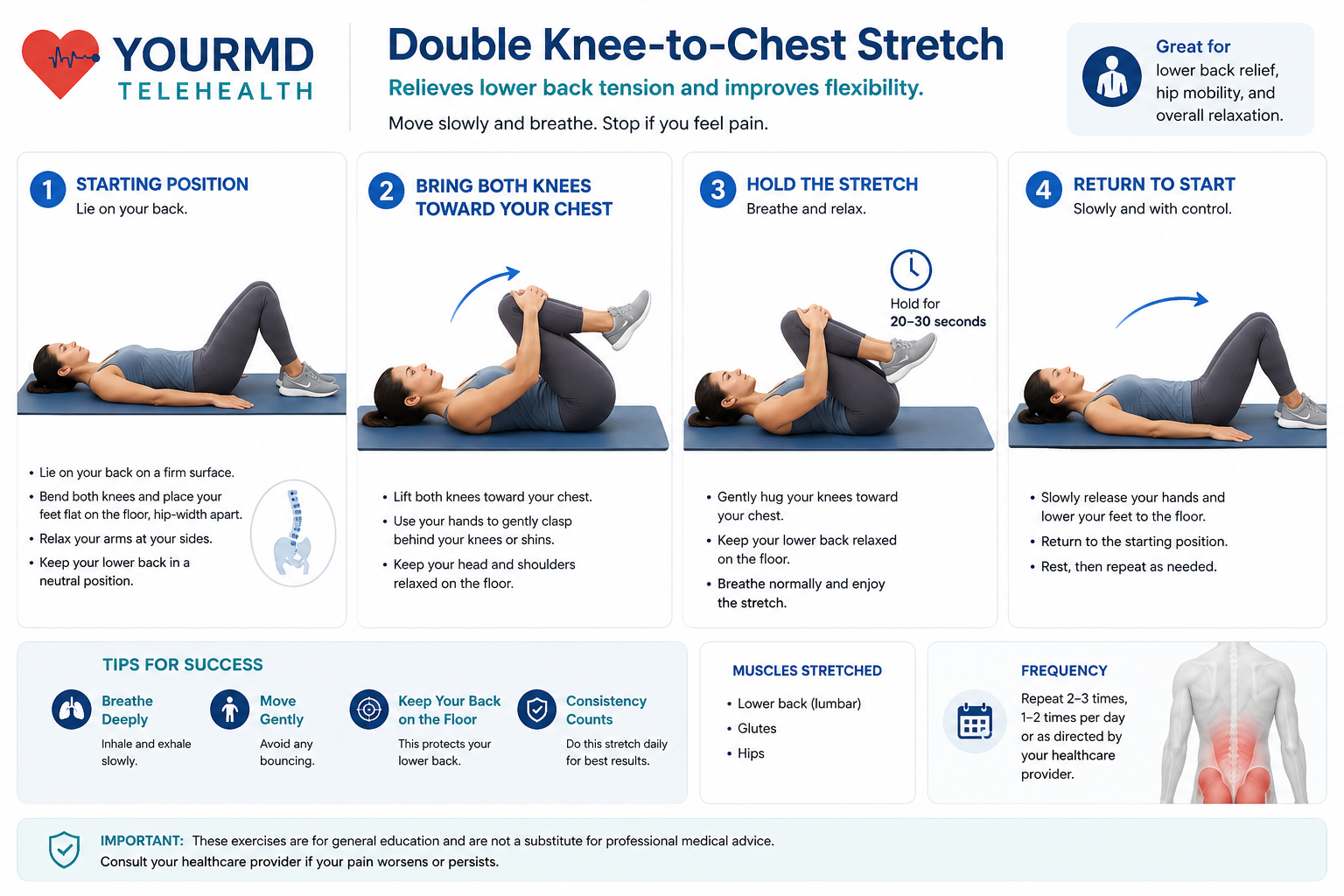
How to Perform the Double Knee-to-Chest Stretch
After the single-leg version feels comfortable, some people progress to the double knee-to-chest stretch: lie on your back, bring one knee toward your chest, bring the second knee up, wrap your arms around both legs, hold for 20–30 seconds, and lower one leg at a time.
This variation increases the stretch across both sides of the lower back. If it feels uncomfortable, return to the single-leg version.
How Often Should You Do This Stretch?
For many people, performing the stretch once or twice daily, after prolonged sitting, before or after walking, or as part of a regular flexibility routine is sufficient. Consistency is generally more important than performing many repetitions.
Common Mistakes to Avoid
- Pulling too hard. The goal is a gentle stretch—not forcing your knee tightly against your chest.
- Holding your breath. Continue slow, relaxed breathing throughout the stretch.
- Lifting your head. Keep your head resting comfortably on the floor.
- Twisting the spine. Keep your hips level throughout the movement.
- Bouncing. Gentle, steady stretching is safer and more effective.
Can This Stretch Help Sciatica?
Sometimes. If your sciatica is related to muscle tightness around the hips or lower back, this stretch may provide relief. However, if bending your spine forward increases pain traveling down your leg, the knee-to-chest stretch may not be appropriate. Sciatica has many possible causes, and different exercises work better for different people.
Can Older Adults Perform This Stretch?
Yes. For many older adults, the knee-to-chest stretch is a gentle way to improve flexibility. Modifications may help if getting down to the floor is difficult: performing the stretch on a firm bed, using a towel behind the thigh to assist, holding the back of the thigh instead of the shin, or performing fewer repetitions initially.
Can You Perform This Stretch During Pregnancy?
As pregnancy progresses, prolonged exercises performed flat on the back are generally not recommended after the first trimester, because the weight of the uterus can reduce blood flow in some positions. If you are pregnant and experiencing back pain, speak with your obstetric healthcare provider or physical therapist before beginning new stretching exercises.
Progressing Your Routine
As your symptoms improve, the knee-to-chest stretch works well alongside strengthening exercises such as Pelvic Tilts, Glute Bridges, Bird Dog, Dead Bug, and walking. Improving strength as well as flexibility provides better long-term support for your spine.
Frequently Asked Questions
How long should I hold the stretch?
Hold the stretch for about 20–30 seconds while breathing normally.
How many times should I repeat it?
Most people perform 2–4 repetitions per leg.
Should both legs stay bent?
For the single knee-to-chest stretch, keeping the opposite knee bent is often more comfortable. Some people prefer extending the opposite leg if it does not increase discomfort. Choose the position that feels best for your back.
Can I do this every day?
Yes. Many people perform this stretch daily as part of a flexibility or back pain routine.
When Should You Contact Your Healthcare Provider?
Contact your healthcare provider if the stretch consistently increases your pain, pain radiates farther down your leg, you develop numbness or weakness, your back pain lasts longer than several weeks, or your symptoms interfere with work, sleep, or daily activities.
Seek Immediate Medical Care If
Seek emergency medical attention immediately if you experience loss of bowel or bladder control, numbness in the groin or saddle area, significant leg weakness, severe back pain after major trauma, fever, chills, or unexplained weight loss with back pain, or sudden severe back pain accompanied by abdominal pain, dizziness, or fainting.
The Bottom Line
The knee-to-chest stretch is a simple, gentle exercise that can help reduce lower back tightness, improve flexibility, and restore comfortable movement for many people with uncomplicated back pain. Performed slowly and consistently, it can become an effective part of your daily routine and complements strengthening exercises that support long-term spine health.
Remember that stretching should never cause sharp or worsening pain. If your symptoms persist, spread down your leg, or are accompanied by weakness, numbness, or other warning signs, stop the exercise and seek medical evaluation.