
You wake up with a sore throat, congestion, and a headache. Within a few hours you’re wondering whether it’s just a cold, the flu, COVID-19, or allergies.
The truth is that these conditions often overlap, especially during the fall and winter months. Physicians diagnose them by looking at the pattern of symptoms, how quickly they developed, your medical history, and whether testing is appropriate. The good news is that many mild respiratory illnesses can be evaluated through telehealth — a physician can help determine whether you likely have a viral illness, allergies, or a bacterial infection that requires treatment.
Why These Illnesses Feel So Similar
The nose, throat, and lungs respond to many infections in similar ways. Inflammation causes congestion, runny nose, cough, sore throat, and fatigue. Because these symptoms overlap, no single symptom confirms the diagnosis — instead, physicians look at the overall pattern.
The Common Cold
The common cold is caused by one of more than 200 viruses, most commonly rhinoviruses, and symptoms usually develop gradually: runny nose, nasal congestion, mild sore throat, sneezing, mild cough, and mild fatigue. Most adults recover within 7 to 10 days, although a cough may linger for several weeks. High fever is uncommon.
Influenza (The Flu)
Influenza usually develops much more suddenly — many patients can identify the exact hour they became sick. Common symptoms include high fever, chills, severe body aches, headache, fatigue, dry cough, and sore throat. Unlike a cold, influenza often leaves patients feeling too ill to work or attend school. Early antiviral treatment may shorten illness in selected high-risk patients if started within 48 hours of symptom onset.
COVID-19
COVID-19 symptoms vary considerably and commonly include fever, cough, fatigue, sore throat, congestion, body aches, and headache. Some patients also experience loss of taste or smell, diarrhea, or nausea. Although newer variants often produce milder symptoms than earlier strains, COVID-19 can still cause serious illness in older adults and people with chronic medical conditions.
Seasonal Allergies
Unlike infections, allergies are caused by your immune system reacting to pollen, dust mites, mold, or animal dander. Typical symptoms include sneezing, itchy eyes, itchy nose, clear runny nose, nasal congestion, and postnasal drip. Fever is not a feature of seasonal allergies, and symptoms often persist for weeks while pollen counts remain high.
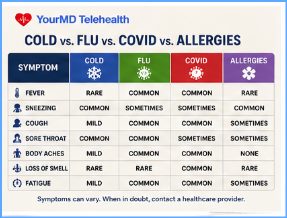
Symptom Comparison
| Symptom | Cold | Flu | COVID-19 | Allergies |
|---|---|---|---|---|
| Fever | Rare | Common | Common | No |
| Sneezing | Common | Rare | Sometimes | Prominent |
| Itchy eyes | Rare | No | Rare | Prominent |
| Body aches | Mild | Severe | Common | No |
| Fatigue | Mild | Severe | Common | Mild |
| Congestion | Prominent | Sometimes | Common | Prominent |
| Loss of taste/smell | Rare | Rare | Sometimes | No |
| Sudden onset | No | Yes | Variable | No |
Do You Need Antibiotics?
One of the most common misconceptions is that antibiotics help respiratory infections. They usually do not. Colds, influenza, and COVID-19 are all caused by viruses, and antibiotics kill bacteria, not viruses. Using antibiotics when they are not needed exposes patients to unnecessary side effects and contributes to antibiotic resistance.
When Should You Consider Testing?
Testing may be appropriate if COVID-19 exposure occurred, influenza is circulating in your community, symptoms are severe, you are at high risk for complications, or testing would change treatment decisions. Your physician can help determine whether testing is recommended.
What Treatments Actually Help?
Common cold: rest, fluids, acetaminophen or ibuprofen, saline nasal spray, and humidification. Influenza: higher-risk patients may benefit from antiviral medication if treatment begins early. COVID-19: some higher-risk patients qualify for antivirals that reduce the risk of hospitalization, depending on age, medical conditions, and timing. Seasonal allergies: antihistamines, nasal steroid sprays, eye drops, and prescription allergy medications.
When a Sinus Infection May Develop
Most colds improve within 7 to 10 days. However, bacterial sinusitis becomes more likely when symptoms persist beyond 10 days without improvement, symptoms improve then suddenly worsen, fever returns after initial recovery, or thick nasal drainage continues with significant facial pain. These situations deserve medical evaluation because antibiotics may become appropriate.
Can Telehealth Help?
Absolutely. Telehealth is one of the best ways to evaluate uncomplicated respiratory illnesses. Your physician can determine whether your illness appears viral, whether testing is recommended, whether antiviral medication may help, whether antibiotics are appropriate, and whether you should be evaluated in person — all without exposing others in a waiting room.
Frequently Asked Questions
How long should a cold last?
Most colds improve within one week, although coughs may last longer.
Can allergies cause a sore throat?
Yes. Postnasal drip frequently irritates the throat.
Should I take antibiotics for green mucus?
Not necessarily. Green mucus alone does not indicate a bacterial infection.
Can I have COVID-19 without fever?
Yes. Some patients never develop fever.
How YourMD Telehealth Can Help
Respiratory illnesses are among the most common reasons patients use YourMD Telehealth. Whether you’re dealing with congestion, sore throat, cough, fever, or seasonal allergies, a board-certified physician can help determine the most likely cause and recommend evidence-based treatment. Adults in Nevada, Washington, Oregon, and Wisconsin can choose secure messaging ($20), live physician chat ($20), phone consultation ($40), or video consultation ($50). When appropriate, prescriptions can be sent electronically to your pharmacy; if testing or emergency care is needed, we’ll explain why. See also: strep vs. viral sore throat and what can be treated through telehealth. A new patient’s first consultation is $60; the visit prices above apply to established patients.
References
- Centers for Disease Control and Prevention. Common Cold, Influenza, and COVID-19 Clinical Resources.
- Infectious Diseases Society of America. Seasonal Influenza Guidelines.
- National Institute of Allergy and Infectious Diseases. Respiratory Viral Infections.
- American Academy of Family Physicians. Diagnosis and Management of Acute Respiratory Infections.
- World Health Organization. COVID-19 Clinical Management Guidelines.
This article is for general educational purposes and is not a substitute for individualized medical advice. Prescriptions are provided only when a physician determines treatment is clinically appropriate. Services currently available to adults 18+ in Nevada, Washington, Oregon, and Wisconsin.