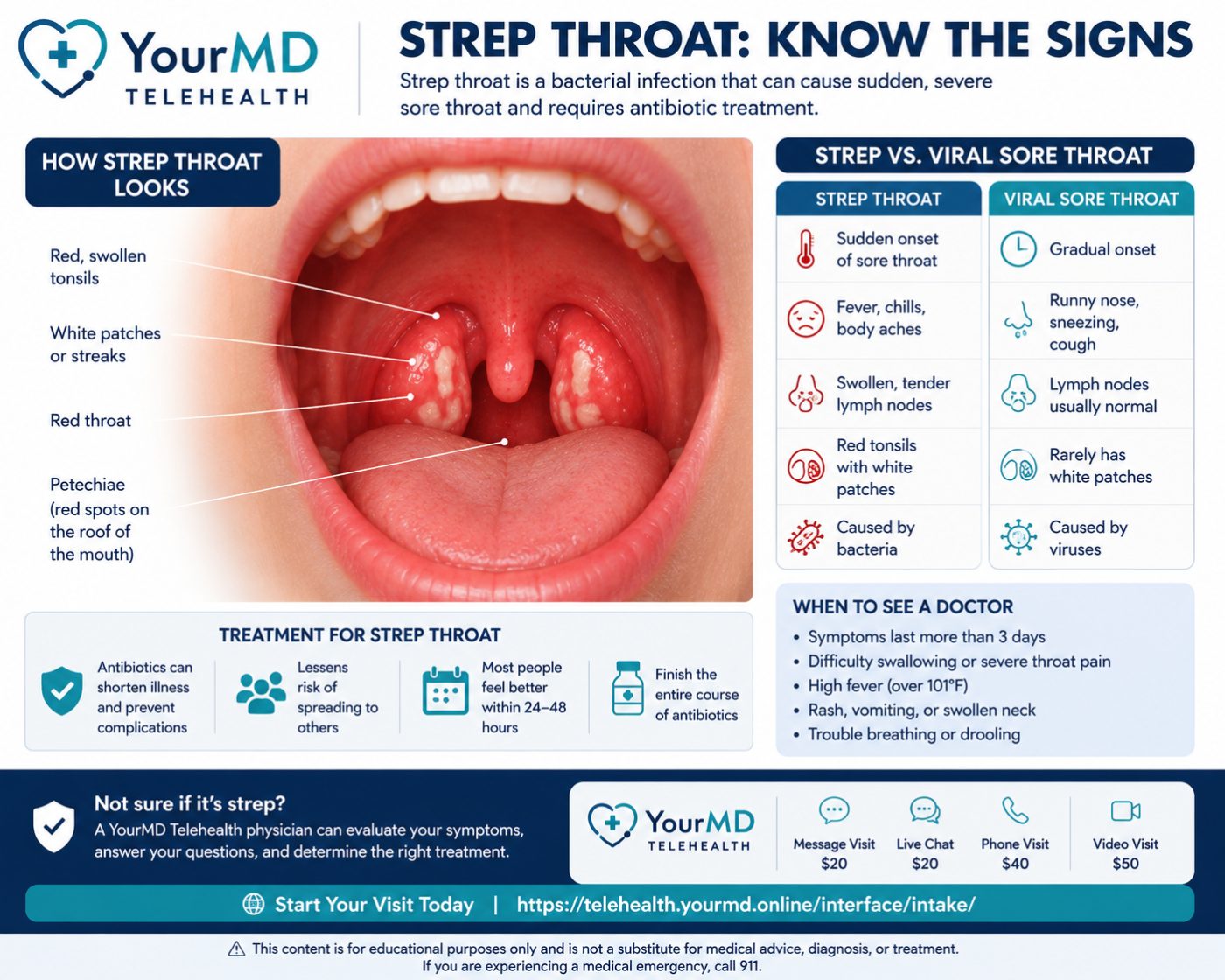

A sore throat is one of the most common reasons people visit a doctor. Sometimes it is only a minor annoyance that disappears within a few days. Other times it becomes painful enough to make swallowing difficult and raises concerns about strep throat.
Many patients assume that every sore throat requires antibiotics. In reality, most sore throats are caused by viruses, not bacteria. Understanding the difference helps patients receive the right treatment while avoiding unnecessary antibiotics. Telehealth offers a convenient way to discuss your symptoms with a physician and determine whether supportive care, testing, or antibiotic treatment is appropriate.
What Causes a Sore Throat?
The medical term for a sore throat is pharyngitis, which simply means inflammation of the throat. Common causes include viral infections, streptococcal bacteria (strep throat), seasonal allergies, postnasal drip, acid reflux (GERD), dry air, smoking or vaping, and irritants such as pollution. The most common cause by far is a viral upper respiratory infection.
Viral Sore Throat
Viruses cause approximately 70% to 90% of sore throats in adults — including rhinovirus, coronavirus, influenza, COVID-19, adenovirus, and Epstein-Barr virus (mononucleosis). Symptoms often include a sore throat, runny nose, cough, hoarse voice, congestion, sneezing, and mild fever. These symptoms strongly suggest a viral infection.
What Is Strep Throat?
Strep throat is caused by Group A Streptococcus (Streptococcus pyogenes). Unlike viral infections, strep throat typically develops suddenly. Common symptoms include a severe sore throat, painful swallowing, fever, swollen lymph nodes, white patches on the tonsils, headache, and nausea (especially in children). Importantly, cough and runny nose are usually absent.
Viral vs. Strep Throat
| Symptom | Viral | Strep |
|---|---|---|
| Runny nose | Prominent | Rare |
| Cough | Prominent | Rare |
| Sneezing | Common | Rare |
| Fever | Mild | Prominent |
| White spots on tonsils | Sometimes | Common |
| Swollen lymph nodes | Mild | Common |
| Sudden onset | Sometimes | Prominent |
Physicians often use these symptom patterns to estimate the likelihood of strep infection.
Do You Need a Strep Test?
Many adults do not need immediate testing. Physicians frequently use the Centor or Modified Centor (McIsaac) criteria, which consider fever, tonsillar swelling or exudates, tender neck lymph nodes, absence of cough, and patient age. Patients with higher scores are more likely to benefit from rapid strep testing or throat culture. Telehealth can help determine whether testing is appropriate before you make an unnecessary trip to urgent care.
Why Treat Strep?
Unlike viral infections, strep throat benefits from antibiotics. Treatment helps shorten illness modestly, reduce transmission, prevent complications such as rheumatic fever, and decrease the risk of peritonsillar abscess. However, antibiotics only help if Group A Streptococcus is actually present.
Why Antibiotics Don’t Help Viral Sore Throats
Antibiotics do not kill viruses. Taking them unnecessarily can cause diarrhea, yeast infections, allergic reactions, and antibiotic resistance. Supportive care is usually the best treatment for viral sore throats.
How to Feel Better at Home
Most viral sore throats improve within several days. Helpful treatments include plenty of fluids, warm tea with honey (adults and children over one year), saltwater gargles, acetaminophen, ibuprofen, humidifiers, and throat lozenges. Rest is also important while your immune system clears the infection.
Other Causes of Sore Throat
Not every sore throat is caused by infection. Seasonal allergies and postnasal drip commonly irritate the throat; acid reflux often causes chronic morning soreness; mononucleosis usually causes severe fatigue, enlarged lymph nodes, fever, and swollen tonsils; and tobacco or vaping frequently irritates the throat.
Can Telehealth Help?
Yes. Many sore throats can initially be evaluated through telehealth. Your physician will review fever, cough, runny nose, swallowing difficulty, medical history, exposure to strep, and duration of symptoms. If your symptoms strongly suggest strep throat, testing may be recommended before antibiotics are prescribed. If your symptoms are more consistent with a viral illness, your physician can recommend evidence-based supportive treatment and explain warning signs that require follow-up.
Frequently Asked Questions
Can strep throat go away without antibiotics?
Yes, most cases eventually improve. However, antibiotics reduce complications and transmission when strep is confirmed.
Can adults get strep throat?
Absolutely. Although more common in children, adults develop strep infections every year.
Are white spots always strep?
No. Viral infections, mononucleosis, and other conditions may also produce white patches on the tonsils.
How long am I contagious?
Patients with untreated strep remain contagious until treated or until the illness resolves naturally. After starting antibiotics, most people are much less contagious within 24 hours.
How YourMD Telehealth Can Help
If you’re experiencing a sore throat, you don’t always need to spend hours at an urgent care clinic. With YourMD Telehealth, adults in Nevada, Washington, Oregon, and Wisconsin can consult with a board-certified physician from home. When appropriate after your evaluation, secure messaging is $20, live physician chat is $20, phone consultations are $40, and video visits are $50. We’ll determine whether your symptoms suggest a viral infection, whether strep testing is appropriate, or whether another diagnosis should be considered. Our goal is safe, evidence-based care while helping you avoid unnecessary antibiotics and unnecessary office visits. See also: cold vs. flu vs. COVID vs. allergies. A new patient’s first consultation is $60; the visit prices above apply to established patients.
References
- Shulman ST, et al. Clinical Practice Guideline for the Diagnosis and Management of Group A Streptococcal Pharyngitis. Clinical Infectious Diseases. 2012.
- Centers for Disease Control and Prevention. Group A Streptococcal (GAS) Pharyngitis.
- American Academy of Family Physicians. Diagnosis and Treatment of Streptococcal Pharyngitis.
- Infectious Diseases Society of America. Practice Guidelines for Streptococcal Pharyngitis.
- Bisno AL. Acute Pharyngitis. New England Journal of Medicine. 2001.
This article is for general educational purposes and is not a substitute for individualized medical advice. Prescriptions are provided only when a physician determines treatment is clinically appropriate. Services currently available to adults 18+ in Nevada, Washington, Oregon, and Wisconsin.