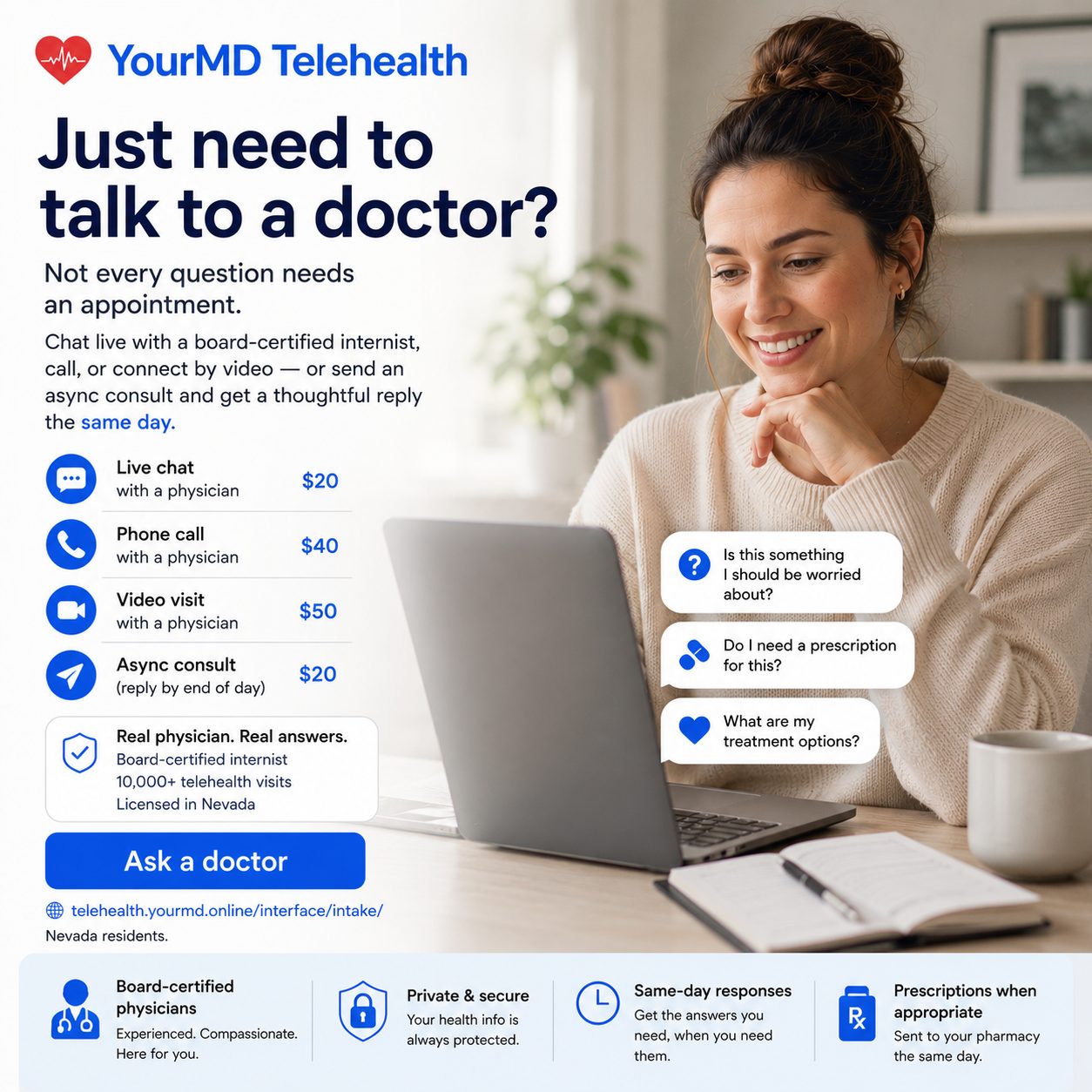

Not every health concern begins with severe pain, a high fever, or an obvious emergency. Sometimes you simply have a question. Maybe you’ve developed a new rash, you’re wondering if a medication side effect is normal, or you’re trying to decide whether your symptoms can wait until tomorrow.
For decades, patients had only two options: wait weeks for a primary care appointment or spend hours at an urgent care clinic. Telehealth has changed that. Today, many common medical concerns can be evaluated by a physician from the comfort of your home through secure messaging, a phone call, or a video visit. Telehealth is not meant to replace emergency care or every in-person office visit — it provides timely access to a physician for many everyday concerns while helping patients receive guidance before a small problem becomes a larger one.
What Is Telehealth?
Telehealth refers to healthcare services delivered using secure communication technology. Depending on your needs, this may include secure messaging, telephone consultations, video visits, remote review of photographs, electronic prescriptions when clinically appropriate, and follow-up care after an office visit. The goal is simple: make healthcare more accessible without compromising quality or safety.
What Can Be Treated Through Telehealth?
Many common conditions can be evaluated effectively online, including:
- Urinary tract infections
- Yeast infections and bacterial vaginosis
- Birth control refills and contraceptive counseling
- Seasonal allergies
- Sinus symptoms
- Cold sores
- Migraine headaches
- Adult acne
- Medication questions — side effects, dosing, and treatment plans
What Happens During an Online Visit?
Many people are surprised by how similar telehealth feels to an office appointment. Your physician begins by asking detailed questions about your symptoms, medical history, current medications, allergies, previous treatments, and family history when appropriate. Depending on your concern, you may also upload photographs or participate in a video examination. After reviewing your information, your physician explains the diagnosis, discusses treatment options, and answers your questions. If prescription medication is appropriate, it can often be sent electronically to your preferred pharmacy.
Is Telehealth Safe?
When used for appropriate medical conditions, telehealth has been shown to provide safe, effective, and patient-centered care. Multiple studies have demonstrated high patient satisfaction and comparable outcomes for many common outpatient conditions. The key is selecting the right patients for telemedicine. A responsible physician also recognizes when telehealth is not appropriate and recommends an in-person examination, laboratory testing, imaging, or emergency care when necessary.
When Telehealth Is the Right Choice
Telehealth works particularly well when symptoms are uncomplicated, you need timely medical advice, you have difficulty scheduling appointments, you need prescription refills, you require follow-up after a previous diagnosis, you want to avoid unnecessary urgent care visits, or you prefer receiving care from home.
Preparing for Your Telehealth Visit
A little preparation helps your visit go smoothly. Before your appointment, write down your symptoms, make a list of medications, know your allergies, have your pharmacy information available, prepare questions, upload clear photographs if requested, and choose a quiet, private location if using video. The more information you provide, the more personalized your care can be.
Frequently Asked Questions
Will I still see a real physician?
Yes. Your evaluation is performed by a licensed physician, just as it would be during an office visit.
Can prescriptions be sent electronically?
Yes. When medically appropriate, prescriptions can be sent directly to your preferred pharmacy.
Can telehealth replace my primary care physician?
No. Telehealth complements, rather than replaces, ongoing primary care. Routine preventive care, vaccinations, chronic disease management, and recommended screenings remain important.
What if I need laboratory testing?
If laboratory studies or imaging are necessary, your physician will explain why and recommend the appropriate next steps.
Why Patients Choose YourMD Telehealth
Healthcare should be accessible when you need it, not only when an appointment becomes available. At YourMD Telehealth, we focus on providing thoughtful, evidence-based medical care that respects your time and your concerns. Adults in Nevada, Washington, Oregon, and Wisconsin can choose the visit type that best fits their needs: secure asynchronous messaging $20, live physician chat $20, phone consultation $40, and video visit $50. A new patient’s first consultation is $60; the visit prices above apply to established patients.
Unlike many national telehealth platforms that connect you with the next available clinician, YourMD Telehealth is built around continuity, physician-led care, and thoughtful medical decision-making. Our practice emphasizes board-certified physician care, evidence-based treatment recommendations, honest guidance about when medication is and is not appropriate, convenient same-day access for many common conditions, transparent pricing with no subscription required for individual visits, and secure, HIPAA-compliant communication. If your condition requires an office visit, laboratory testing, imaging, or emergency care, we’ll explain exactly why and help you understand your next step.
References
- American Medical Association. Telehealth Implementation Playbook.
- American College of Physicians. Telemedicine in Primary Care: Policy Recommendations.
- Centers for Medicare & Medicaid Services. Telehealth Services Overview.
- Agency for Healthcare Research and Quality. The Evidence Base for Telehealth.
- Totten AM, et al. Telehealth: Mapping the Evidence for Patient Outcomes. AHRQ.
This article is for general educational purposes and is not a substitute for individualized medical advice. Prescriptions are provided only when a physician determines treatment is clinically appropriate. Services currently available to adults 18+ in Nevada, Washington, Oregon, and Wisconsin.