
If you use a continuous glucose monitor (CGM), you've probably compared it with a finger-stick glucose meter at least once. You check your glucose meter, then you look at your CGM — and the numbers aren't exactly the same.
It's a common question: "Which one is right?"
The reassuring answer is that small differences are expected. In most cases, your CGM and glucose meter are measuring different things at different moments in time—not because one is "wrong," but because they work differently. Understanding those differences can help you use both tools with confidence.
Your CGM and Glucose Meter Measure Different Fluids
Although both devices estimate your glucose level, they do not measure glucose in the same place.
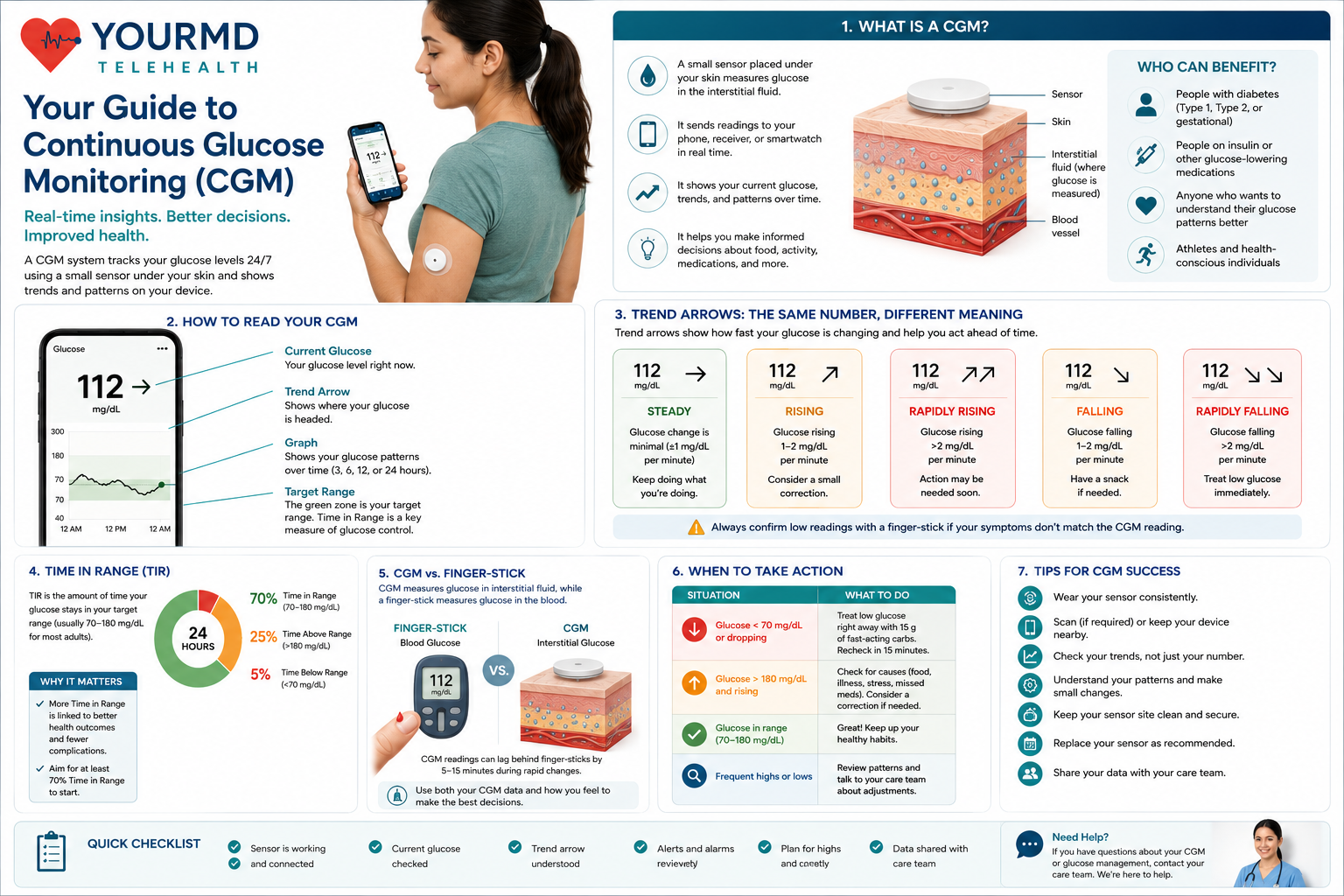
A finger-stick glucose meter measures glucose directly from a small drop of blood. A continuous glucose monitor measures glucose in the interstitial fluid, the fluid that surrounds your body's cells just beneath the skin.
Because glucose moves from your bloodstream into the interstitial fluid, the two measurements are closely related—but they are not identical.
CGM Readings May Lag Behind Blood Glucose
One of the most important reasons for differences is timing. When your blood glucose changes quickly, it takes several minutes for those changes to appear in the interstitial fluid. This delay is called physiologic lag, and it is a normal part of how the body works.
During times when glucose is changing rapidly, your CGM may briefly appear "behind" your finger-stick reading.
When Differences Are Most Common
You are most likely to notice differences when your glucose is changing quickly. This often happens:
- After eating a meal
- Shortly after taking rapid-acting insulin
- During or after exercise
- While treating low blood sugar
- During periods of illness or stress
At these times, your glucose may be rising or falling faster than your CGM can fully reflect.
Small Differences Are Normal
Many people expect the two numbers to match exactly. They usually won't. Both CGMs and glucose meters have an accepted margin of measurement variability. Small differences between the two devices are expected and do not necessarily indicate that either device is malfunctioning.
Instead of asking whether the numbers are identical, ask: Are they reasonably close? Do they show the same overall trend? Do they make sense based on how I feel? These questions are often more useful than comparing every single number.
Look at Trends, Not Individual Readings
A glucose meter provides one measurement at one moment. A CGM provides hundreds of measurements each day, letting you see whether glucose is rising or falling, how meals affect you, overnight patterns, and daily trends.
Even if one CGM reading differs slightly from a finger-stick reading, the overall pattern is often much more valuable than a single number.
Consider How You Feel
Your symptoms are important. If your CGM says your glucose is low but you feel completely normal, or your CGM shows a normal value while you have symptoms of hypoglycemia, don't ignore how you feel.
Follow your healthcare provider's instructions for confirming glucose readings and treating symptoms. Your body provides valuable information that should always be considered alongside device readings.
Sensor Placement Can Matter
CGM sensors are designed to work in specific locations on the body. Using the recommended insertion sites helps improve accuracy. Always follow your CGM manufacturer's instructions regarding approved sensor locations, sensor insertion, warm-up periods, and calibration requirements, if applicable. See our guide on how to insert a CGM sensor.
Compression Can Affect CGM Readings
Some people notice unexpectedly low CGM readings while sleeping. This may happen if prolonged pressure is placed on the sensor while lying on it. These are often called compression lows, and they usually improve after changing position.
If your CGM reports a low glucose value while you feel well, follow your healthcare provider's recommendations for confirming the reading before treating it.
Why Accuracy Improves Over Time
Some CGM systems may be slightly less accurate immediately after a new sensor is inserted. As the sensor settles into the surrounding tissue, performance often becomes more stable. This varies among different CGM systems, so always follow the instructions provided for your specific device.
Avoid Constant Comparisons
It is tempting to compare every CGM reading with a finger-stick measurement. Doing so often creates unnecessary anxiety. Instead:
- Trust your CGM for day-to-day trends.
- Use your glucose meter when recommended.
- Focus on overall glucose patterns.
- Discuss recurring concerns with your healthcare provider.
Remember that both devices are tools designed to help you manage your diabetes.
Frequently Asked Questions
Which device is more accurate?
Both CGMs and glucose meters are highly accurate when used correctly, but they measure glucose differently. Rather than thinking of one as better than the other, think of them as complementary tools that provide different kinds of information.
Is it normal for my CGM to be different after meals?
Yes. Because glucose often changes rapidly after eating, temporary differences between a CGM and a finger-stick reading are common.
Should my numbers ever be exactly the same?
Sometimes they will be. Often they won't. Small differences are expected because the devices measure glucose in different body fluids and because all medical devices have some measurement variability.
Should I keep checking with my glucose meter?
Follow your healthcare provider's recommendations and the instructions for your specific CGM system. Some situations require confirmation with a finger-stick glucose meter, while others do not. See when to confirm a CGM reading.
When Should You Contact Your Healthcare Provider?
Contact your healthcare provider if your CGM repeatedly differs from your glucose meter by much more than expected, your symptoms do not match your CGM readings, your sensor frequently reports unexpected values, you are unsure whether your CGM is functioning correctly, or you have questions about interpreting your glucose data.
Seek Immediate Medical Care If
Seek emergency medical attention if you have symptoms of severe hypoglycemia or severe hyperglycemia, become confused, difficult to awaken, or lose consciousness, experience a seizure, have persistent vomiting with very high blood sugar, or develop difficulty breathing or severe illness.
In an emergency, your symptoms are more important than any single device reading.
The Bottom Line
Continuous glucose monitors and finger-stick glucose meters measure glucose in different ways, so it is normal for their readings to differ slightly.
Rather than expecting identical numbers, focus on the overall picture. Your CGM provides valuable information about trends and patterns, while your glucose meter can help confirm readings in certain situations. Understanding how these tools work together can help you feel more confident managing your diabetes and make better-informed decisions in partnership with your healthcare team.