
If you use a continuous glucose monitor (CGM), you've probably noticed the small arrow that appears next to your glucose reading. At first glance, it may seem like a minor detail. In reality, your trend arrow is one of the most useful pieces of information your CGM provides.
While your glucose value tells you where your glucose is right now, the trend arrow helps show which direction it is moving. Looking at both together gives you a much clearer understanding of what is happening than either one alone.
This article explains what trend arrows mean, why they matter, and how they can help you better understand your diabetes.
What Is a Trend Arrow?
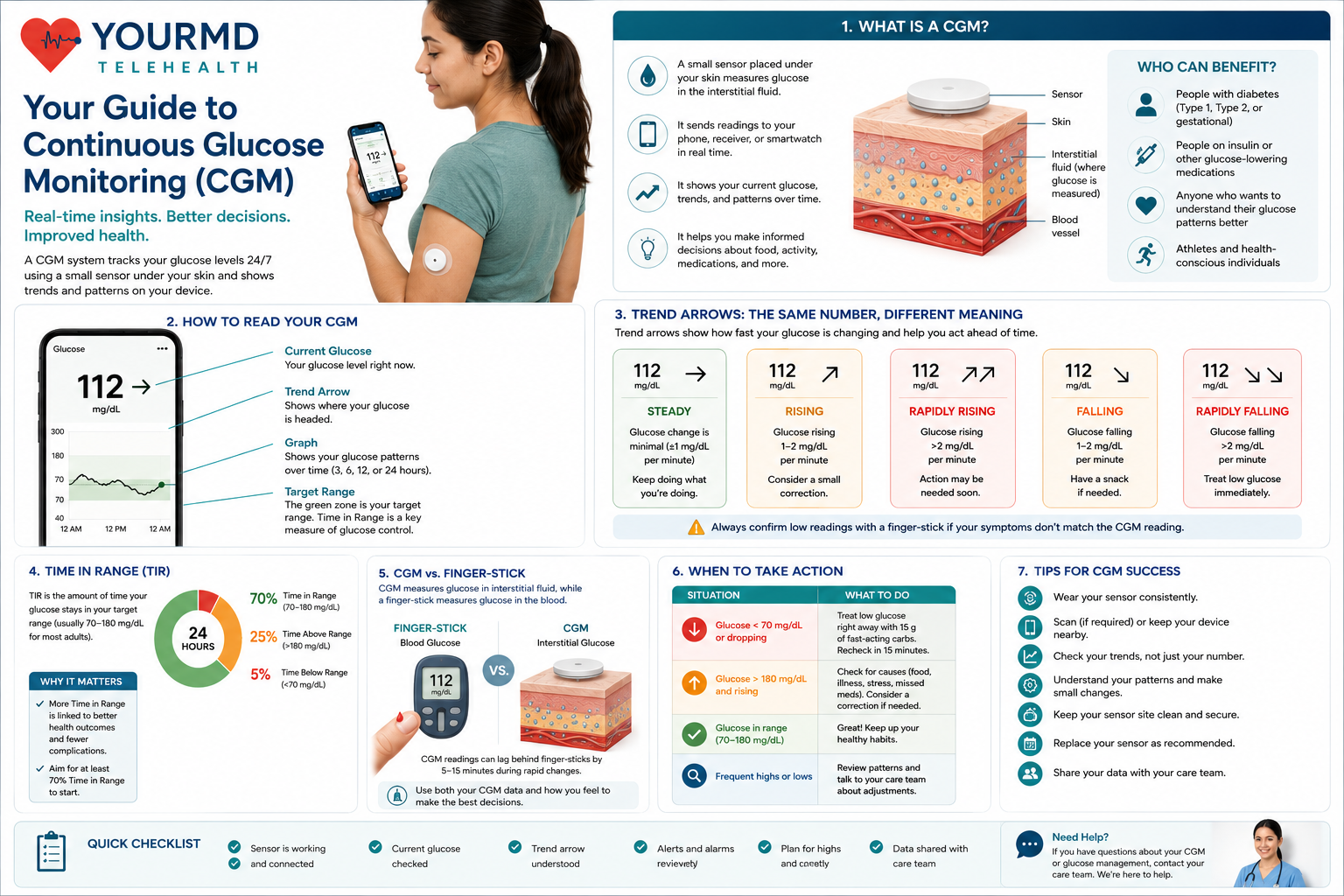
A trend arrow indicates the direction your glucose is moving based on recent sensor readings. Depending on your CGM system, the arrow may indicate that your glucose is:
- Staying relatively stable
- Rising slowly
- Rising rapidly
- Falling slowly
- Falling rapidly
Each manufacturer displays trend arrows slightly differently, but the overall concept is the same. Your trend arrow helps answer an important question: "Where is my glucose likely headed if things continue the same way?"
Why Trend Arrows Matter
Imagine two people whose CGMs both display 110 mg/dL. Person A has a steady trend arrow. Person B has a rapidly falling trend arrow.
Although the glucose number is identical, the situations are very different. Person A may continue with their planned activities without concern. Person B may need to pay closer attention because their glucose could continue falling over the next several minutes.
The glucose number tells you where you are. The trend arrow helps you understand where you may be going.
Glucose Is Always Changing
One of the biggest advantages of CGMs is that they show glucose as a dynamic process rather than a series of isolated numbers. Your glucose changes throughout the day because of meals, physical activity, insulin, other diabetes medications, stress, illness, sleep, and hormonal changes. Trend arrows help you see these changes as they happen.
A Rising Arrow Doesn't Always Mean Something Is Wrong
Many people become anxious when they see an upward arrow. In most cases, there is no reason to panic. It is completely normal for glucose to rise after eating.
The important questions are: How high does it rise? How long does it stay elevated? Does it return toward your usual range? Looking at patterns over time is much more useful than reacting to a single upward trend.
A Falling Arrow Isn't Always an Emergency
Likewise, a downward arrow does not automatically mean your glucose is dangerously low. Glucose commonly falls after physical activity, between meals, and after insulin begins working.
A falling trend simply tells you to be aware of what your glucose is doing. If you are taking insulin or medications that can cause hypoglycemia, your healthcare provider may recommend paying closer attention to downward trends, especially before driving, exercising, or going to sleep.
Look at the Whole Picture
Never interpret a trend arrow by itself. Instead, consider your current glucose value, the direction of the trend, recent meals, recent exercise, insulin or medication timing, and how you feel. These pieces of information work together to provide the best understanding of your current glucose status.
Trend Arrows Help You Learn
One of the greatest benefits of a CGM is education. Over time, you may notice patterns such as:
- Certain breakfasts consistently produce rapid glucose increases.
- Walking after dinner reduces post-meal glucose spikes.
- Strength training affects your glucose differently than aerobic exercise.
- Stressful days are associated with higher glucose levels.
- Overnight glucose remains stable on most nights.
These observations help you understand how your body responds to everyday life.
Don't Chase Every Arrow
New CGM users sometimes feel tempted to react every time the arrow changes direction. This can quickly become frustrating and may lead to unnecessary treatment decisions.
Instead of responding to every small change, watch for overall trends, allow time for meals and medications to work, follow your diabetes care plan, and discuss recurring patterns with your healthcare provider. Remember that glucose naturally rises and falls throughout the day.
Trend Arrows Before Exercise
Checking your CGM before physical activity can provide helpful information. A stable glucose may respond differently to exercise than a rapidly falling glucose, and a rising glucose after a meal may behave differently than the same glucose level several hours later.
Exercise affects everyone differently, so learn how your own body responds over time. If you take insulin or medications that increase the risk of hypoglycemia, follow your healthcare provider's recommendations regarding exercise and glucose monitoring.
Trend Arrows Before Driving
If you use insulin or medications that can cause low blood sugar, it is important to know your glucose before driving. A stable glucose reading provides different information than one that is falling.
Always follow your healthcare provider's advice and local regulations regarding glucose monitoring and driving. If you develop symptoms of low blood sugar while driving, pull over safely and check your glucose.
Can Trend Arrows Predict the Future?
Not exactly. Trend arrows estimate the current direction of glucose based on recent sensor data. They cannot predict what will happen after eating a meal, taking insulin, exercising, treating a low blood sugar, or experiencing stress or illness.
Think of them as a snapshot of your current direction—not a guarantee of what comes next.
Frequently Asked Questions
Should I worry every time I see an upward arrow?
No. Glucose normally rises after eating. Rather than focusing on one upward arrow, pay attention to how your glucose behaves over the next several hours.
Why do my arrows change so often?
Your glucose is constantly responding to your body's needs and your daily activities. Changing trend arrows simply reflect these normal fluctuations.
Can two people have the same glucose number but different trend arrows?
Yes. Two people may both have a glucose reading of 120 mg/dL while one person's glucose is stable and the other's is rising rapidly. This is why trend arrows provide valuable additional information.
Are trend arrows always accurate?
Trend arrows are generally reliable, but they are based on sensor data from interstitial fluid rather than direct blood glucose measurements. If your symptoms do not match your CGM reading or arrow, confirm your glucose using your healthcare provider's recommended approach.
When Should You Contact Your Healthcare Provider?
Schedule a follow-up if you are unsure how to interpret your CGM trends, you have frequent episodes of low blood sugar, your glucose remains consistently above or below your target range, you notice significant changes in your glucose patterns, or you need help understanding how meals, exercise, or medications affect your CGM.
The Bottom Line
Trend arrows are one of the most valuable features of a continuous glucose monitor. Instead of showing only where your glucose is, they help you understand where it is heading. Combined with your current glucose reading, recent activities, and overall glucose patterns, trend arrows provide valuable insight into how your body responds throughout the day.
As you become more familiar with your CGM, you'll likely find yourself relying less on individual glucose numbers and more on the patterns and trends that help guide long-term diabetes management.