
An albuterol inhaler is one of the most common medications used to quickly relieve asthma symptoms. It works by relaxing the muscles around your airways, making it easier to breathe within minutes.
Although albuterol works quickly, many people don't receive the full benefit because they use their inhaler incorrectly. Studies have shown that incorrect inhaler technique is common and can reduce how much medication reaches the lungs. Learning proper technique can improve symptom relief, reduce asthma attacks, and help you get the most from every dose.
What Is Albuterol?
Albuterol is a short-acting beta₂-agonist (SABA), often called a rescue inhaler. It is used to quickly relieve symptoms such as wheezing, shortness of breath, chest tightness, and coughing caused by asthma. Most people begin breathing more easily within 5 to 15 minutes, with the greatest effect occurring around 30 minutes after use.
Before You Use Your Inhaler
Before taking a dose, wash or sanitize your hands if possible, remove the cap, and check the mouthpiece for dust or debris. If the inhaler is new—or hasn't been used for several days—prime it according to the manufacturer's instructions. Always read the specific instructions that came with your inhaler, as different brands may have slightly different directions.
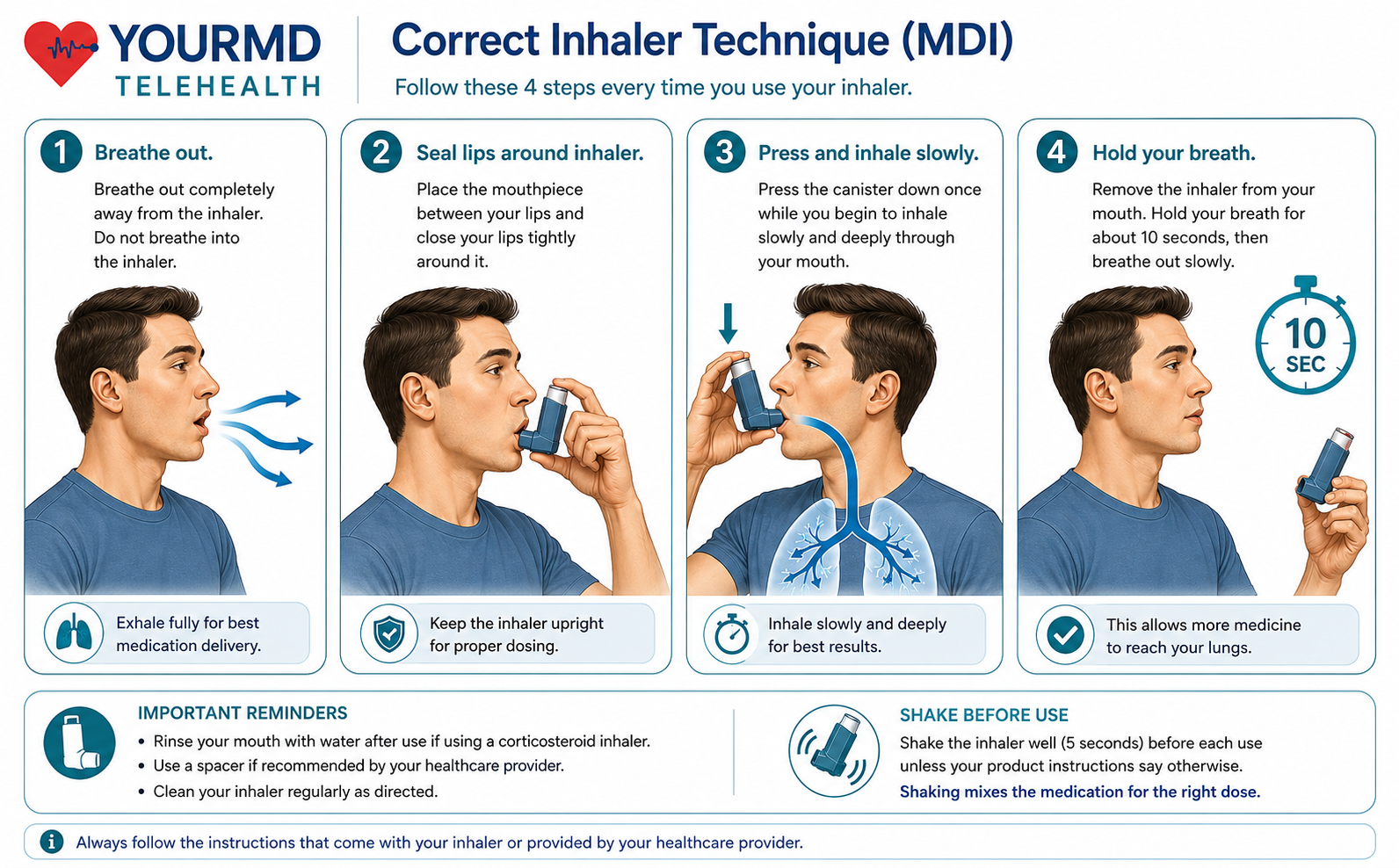
Step-by-Step Instructions
Step 1: Shake the inhaler
Shake the inhaler well for about 5 seconds. This helps mix the medication evenly.
Step 2: Breathe out completely
Exhale as much air as comfortably possible. Do not breathe into the inhaler.
Step 3: Position the inhaler
Place the mouthpiece between your teeth and seal your lips tightly around it. Keep your tongue below the mouthpiece so it doesn't block the spray.
Step 4: Begin breathing in slowly
Start taking a slow, deep breath. As you begin inhaling, press the canister once. Continue breathing in slowly for about 3 to 5 seconds.
Step 5: Hold your breath
Remove the inhaler and hold your breath for about 10 seconds, or as long as comfortable. This gives the medication time to settle deep into your lungs.
Step 6: Exhale slowly
Breathe out gently. If another puff is prescribed, wait about 30 to 60 seconds, shake the inhaler again, and repeat the process.
Should You Use a Spacer?
For many people, yes. A spacer attaches to your inhaler and holds the medication briefly after it is released. This makes it easier to inhale the medication slowly and allows more medicine to reach the lungs instead of the mouth or throat. Children and adults who have trouble coordinating their breathing often benefit from using a spacer — see our full spacer guide.
Common Mistakes
Many people accidentally forget to shake the inhaler, breathe in too quickly, press the inhaler before inhaling, stop inhaling too soon, skip holding their breath, forget to wait between puffs, or use an empty inhaler. Correcting these mistakes can significantly improve how well your medication works — our guide to the 10 most common inhaler mistakes covers each fix.
How Often Can You Use Albuterol?
Use albuterol exactly as prescribed. Many people use one or two puffs every four to six hours as needed, and before exercise if recommended by their healthcare provider.
If you need your rescue inhaler more frequently than prescribed, contact your healthcare provider. Frequent use often means your asthma is not well controlled — see How Often Is Too Often to Use Albuterol?
Side Effects
Common side effects include shaky hands, mild tremor, faster heartbeat, feeling nervous, and headache. These side effects are usually temporary. Seek medical care if you develop severe chest pain, fainting, or worsening breathing after using your inhaler.
Frequently Asked Questions
Should I rinse my mouth afterward?
Unlike steroid inhalers, rinsing your mouth is generally not required after using albuterol.
Can I use my inhaler lying down?
It's best to sit or stand upright whenever possible.
What if I cough immediately afterward?
Occasional coughing can happen. If you cough before completing your inhalation, wait briefly and try again.
How do I know if my inhaler is empty?
Many newer inhalers include a built-in dose counter. If yours doesn't, follow the manufacturer's recommendations for tracking doses rather than relying on the "float test."
When Should You Contact Your Healthcare Provider?
Contact your healthcare provider if you're using your rescue inhaler more than twice a week for symptom relief, your symptoms are becoming more frequent, your inhaler isn't providing the usual relief, or you're waking up at night because of asthma.
Seek Immediate Medical Care If
Seek emergency medical care if your rescue inhaler does not improve severe breathing difficulty, you cannot speak in full sentences, your lips or fingernails turn blue or gray, or you become confused or extremely sleepy.
The Bottom Line
Using your albuterol inhaler correctly helps ensure the medication reaches your lungs, where it can work most effectively. Proper technique, combined with regular follow-up and good asthma control, can reduce flare-ups and improve your quality of life.