
If you've been prescribed a spacer with your inhaler, you're not alone. Healthcare providers often recommend spacers because they make inhalers easier to use and help more medication reach your lungs.
A spacer is a clear plastic chamber that attaches to a metered-dose inhaler (MDI). Instead of spraying medication directly into your mouth, the medication is first released into the spacer, giving you more time to inhale it slowly and deeply. For many people, using a spacer improves asthma control and reduces medication that would otherwise end up in the mouth or throat.
What Is a Spacer?
A spacer is a hollow chamber that connects to a metered-dose inhaler. When you press the inhaler, the medication is temporarily held inside the chamber until you inhale. This reduces the need to perfectly coordinate pressing the inhaler and taking a breath.
Some spacers also include a one-way valve. These are called valved holding chambers and are commonly recommended for children and adults.
Why Should You Use a Spacer?
Using a spacer can deliver more medication to your lungs, reduce medication left in the mouth and throat, make inhalers easier to use, improve asthma control, reduce the risk of side effects from steroid inhalers, and help children and older adults use inhalers more effectively. Many healthcare providers recommend using a spacer with all metered-dose inhalers, especially inhaled corticosteroids.
Which Inhalers Use a Spacer?
Spacers work with metered-dose inhalers (MDIs), including many albuterol inhalers, inhaled corticosteroids, and combination asthma inhalers. Dry powder inhalers (DPIs) and soft mist inhalers generally do not use a spacer. Always follow the instructions for your specific medication.
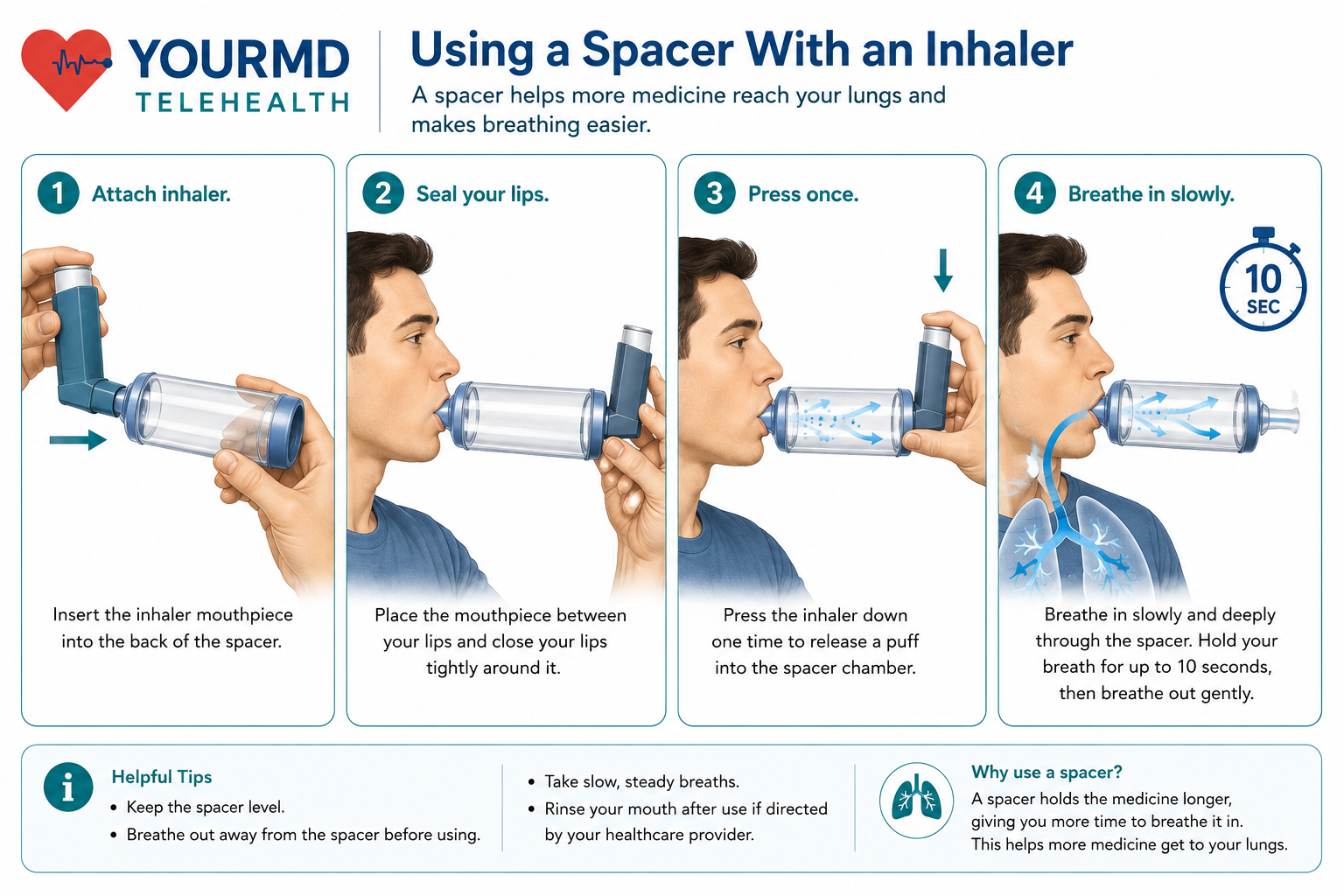
Step-by-Step Instructions
Step 1: Remove the caps
Take the caps off both the inhaler and the spacer. Inspect the mouthpieces for dust, dirt, or debris.
Step 2: Shake the inhaler
Shake the inhaler well for about 5 seconds to mix the medication evenly.
Step 3: Insert the inhaler into the spacer
Place the inhaler firmly into the opening at the back of the spacer and ensure it fits securely.
Step 4: Breathe out completely
Before placing the spacer in your mouth, breathe out normally until your lungs feel comfortably empty. Do not breathe into the spacer.
Step 5: Seal your lips around the mouthpiece
Place the spacer mouthpiece between your teeth and close your lips tightly around it to create a complete seal. If you're using a face mask, ensure it fits snugly over your nose and mouth.
Step 6: Press the inhaler once
Press the inhaler one time so the medication enters the spacer chamber. Only press once before inhaling.
Step 7: Breathe in slowly
Begin inhaling slowly and deeply through the spacer. If your spacer makes a whistling sound, you're breathing in too quickly — slow your breathing until the whistle stops.
Step 8: Hold your breath
Remove the spacer and hold your breath for about 10 seconds, or as long as comfortable. This allows the medication to settle deep inside your lungs.
Step 9: Breathe out slowly
Exhale gently. If another puff is prescribed, wait 30 to 60 seconds, shake the inhaler again, and repeat the process.
Using a Spacer With a Face Mask
Young children often use a spacer with a face mask. When using a mask, place it firmly over the nose and mouth, press the inhaler once, and allow the child to take 5 to 6 slow breaths before removing the mask. A good seal helps ensure the medication reaches the lungs.
Common Mistakes to Avoid
- Forgetting to shake the inhaler
- Pressing the inhaler multiple times before breathing in
- Breathing too quickly
- Waiting too long after pressing the inhaler
- Not sealing your lips around the mouthpiece
- Skipping the breath hold
- Using a dirty spacer
Small improvements in technique can make a big difference in how much medication reaches your lungs.
How to Clean a Spacer
Most spacers should be cleaned about once a week, or according to the manufacturer's instructions. General steps: disassemble the spacer if instructed, wash with warm water and mild dish soap, do not scrub the inside of the chamber, shake off excess water, and allow the spacer to air dry completely before reassembling.
Air drying helps reduce static electricity inside the chamber, which can improve medication delivery. Always follow the cleaning instructions for your specific spacer model.
How Often Should a Spacer Be Replaced?
Spacers can wear out over time. Replace your spacer if it becomes cracked, the valve no longer functions properly, the mouthpiece is damaged, or the manufacturer recommends replacement. Ask your healthcare provider or pharmacist if you're unsure.
Frequently Asked Questions
Do adults need a spacer?
Yes. Although spacers are commonly associated with children, many adults benefit from using one.
Does a spacer make the medication stronger?
No. A spacer doesn't change the medication itself. Instead, it helps more of the medication reach your lungs where it can work effectively.
Should I rinse my mouth after using a spacer?
If you're using an inhaled corticosteroid, yes — rinse your mouth with water and spit it out after each dose to reduce the risk of oral thrush. For albuterol, rinsing is generally not necessary.
Can I share my spacer?
No. A spacer is considered personal medical equipment and should not be shared.
When Should You Contact Your Healthcare Provider?
Contact your healthcare provider if your inhaler doesn't seem to be working, you're using your rescue inhaler more often than usual, you're unsure whether you're using the spacer correctly, your asthma symptoms are becoming more frequent, or your spacer becomes damaged.
Seek Immediate Medical Care If
Call 911 or seek emergency medical care immediately if your inhaler and spacer do not relieve severe shortness of breath, you cannot speak in full sentences, your lips or fingernails become blue or gray, your breathing rapidly worsens despite treatment, or you become confused or difficult to awaken. These symptoms may indicate a severe asthma attack requiring emergency treatment.
The Bottom Line
A spacer is a simple device that can significantly improve how well your inhaler works by helping more medication reach your lungs. It reduces the need to coordinate your breathing with the inhaler and is recommended for many children and adults using metered-dose inhalers.
By using the correct technique, cleaning your spacer regularly, and replacing it when needed, you can improve asthma control and get the most benefit from every dose of medication.