
If you've ever wondered whether you're using your inhaler correctly, you're not alone. Research has consistently shown that many adults and children make at least one mistake when using an inhaler. Even small errors can prevent medication from reaching your lungs, making asthma or COPD harder to control.
The good news is that most inhaler mistakes are easy to correct once you know what to look for.
Why Proper Inhaler Technique Matters
An inhaler is designed to deliver medication directly into your lungs. When used correctly, this allows faster symptom relief, better asthma control, fewer asthma attacks, lower medication waste, and improved long-term lung health. When used incorrectly, much of the medication may end up in your mouth or throat instead of your airways.
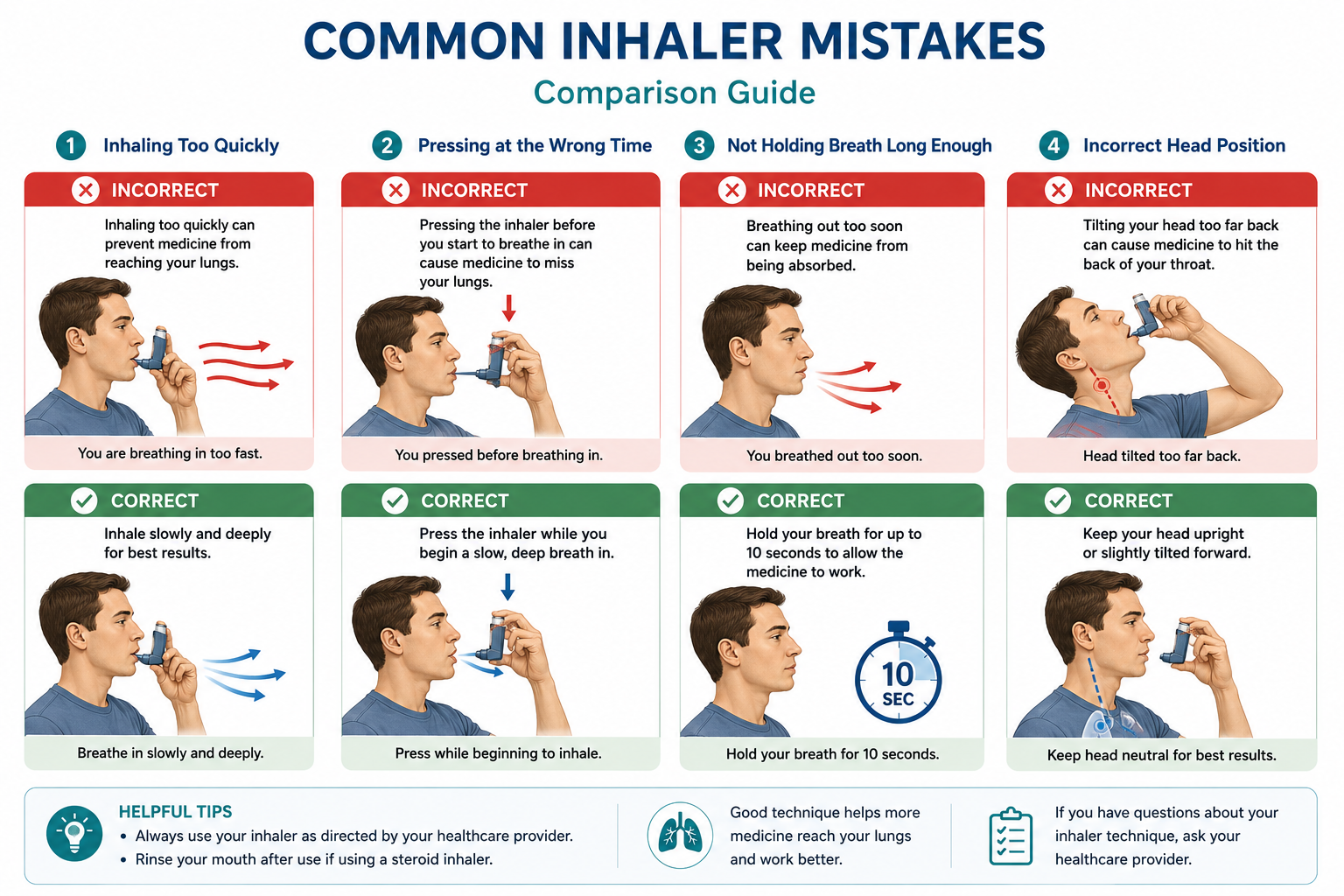
Mistake #1: Forgetting to Shake the Inhaler
Many metered-dose inhalers (MDIs), including most albuterol inhalers, should be shaken before each use. Shaking mixes the medication evenly inside the canister; skipping this step may result in inconsistent dosing. Always follow the instructions provided with your specific inhaler, as some inhalers do not require shaking.
Mistake #2: Not Breathing Out Before Using the Inhaler
Before taking a puff, exhale normally until your lungs feel comfortably empty. This creates room for a slow, deep breath that carries the medication deeper into your lungs. Avoid breathing directly into the inhaler.
Mistake #3: Breathing In Too Fast
One of the most common mistakes is inhaling too quickly. For most metered-dose inhalers, your breath should be slow, steady, and deep. Breathing in too quickly can cause the medication to hit the back of your throat instead of reaching your lungs.
Mistake #4: Poor Timing Between Pressing and Breathing
The medication should be released as you begin to inhale. If you press the inhaler too early or too late, much of the medication may never reach your lungs. This is one reason many healthcare providers recommend using a spacer.
Mistake #5: Not Holding Your Breath
After inhaling the medication, hold your breath for about 10 seconds, or as long as comfortable. This gives the tiny medication particles time to settle deep within your airways. Immediately breathing out reduces the amount of medicine that reaches your lungs.
Mistake #6: Skipping the Spacer
A spacer is a chamber that attaches to many metered-dose inhalers. It helps improve medication delivery, reduce medication deposited in the mouth, make inhalers easier to use, and improve coordination between pressing and breathing. Children and many adults benefit from using one — see our step-by-step spacer guide.
Mistake #7: Not Waiting Between Puffs
If your healthcare provider recommends two puffs, wait approximately 30 to 60 seconds between doses and shake the inhaler again before taking the second puff. This allows the first dose to begin opening the airways, helping the second dose reach deeper into the lungs.
Mistake #8: Forgetting to Clean the Inhaler
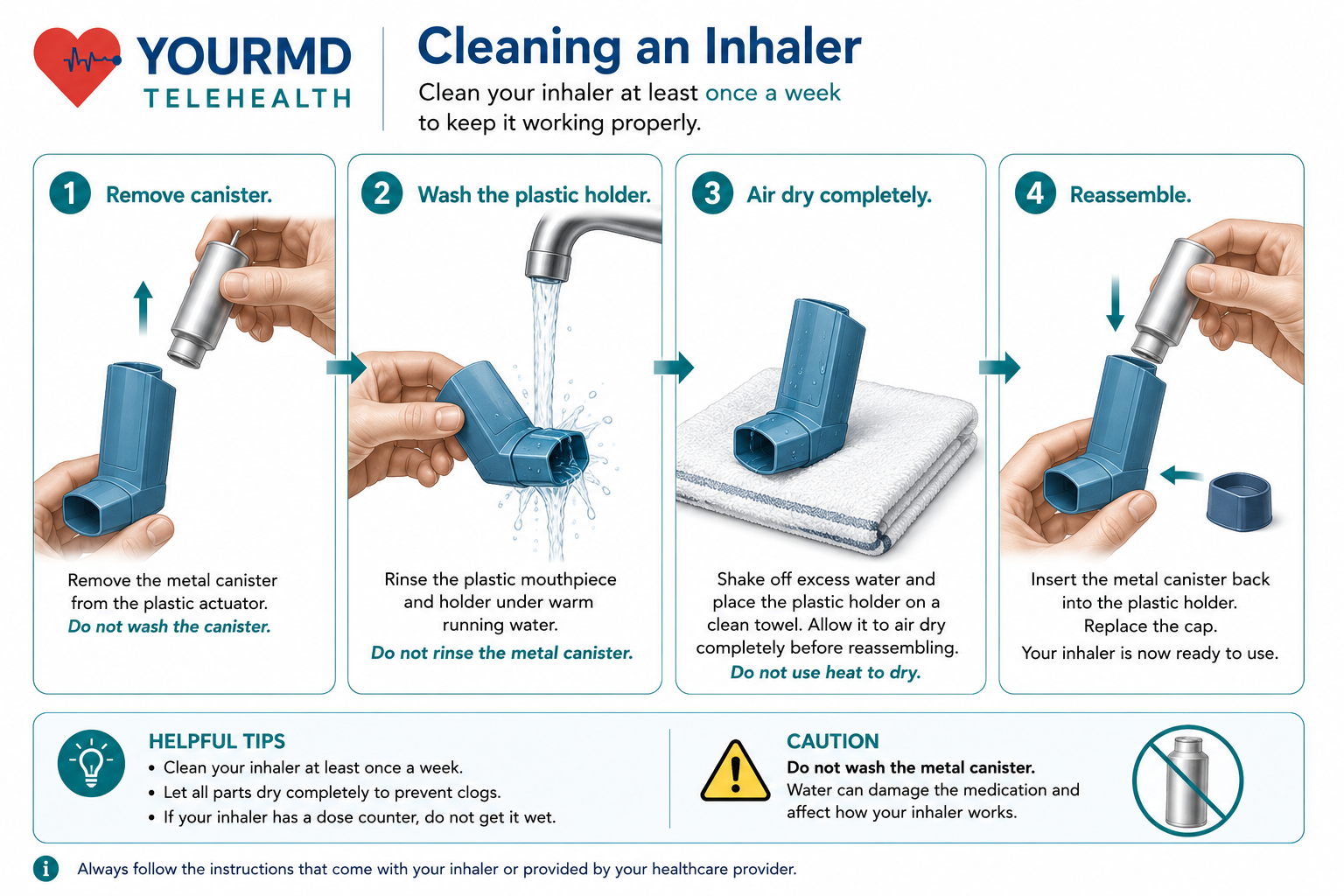
Medication residue can build up around the mouthpiece over time. Depending on your inhaler, cleaning recommendations may vary. Regular cleaning helps prevent blockage and ensures consistent medication delivery. Always follow the manufacturer's instructions.
Mistake #9: Using an Empty Inhaler
Many modern inhalers have built-in dose counters. If yours doesn't, track your doses and refill your prescription before you run out — don't wait until your inhaler feels empty. The old "float test" (placing the inhaler canister in water) is not recommended because it does not accurately measure the remaining medication.
Mistake #10: Using Your Rescue Inhaler Too Often
Your rescue inhaler should relieve occasional symptoms. If you're using albuterol every day, multiple times each day, or more often than recommended by your healthcare provider, your asthma may not be well controlled. Frequent rescue inhaler use often means your treatment plan needs adjustment — see How Often Is Too Often to Use Albuterol?
Metered-Dose Inhalers vs Dry Powder Inhalers
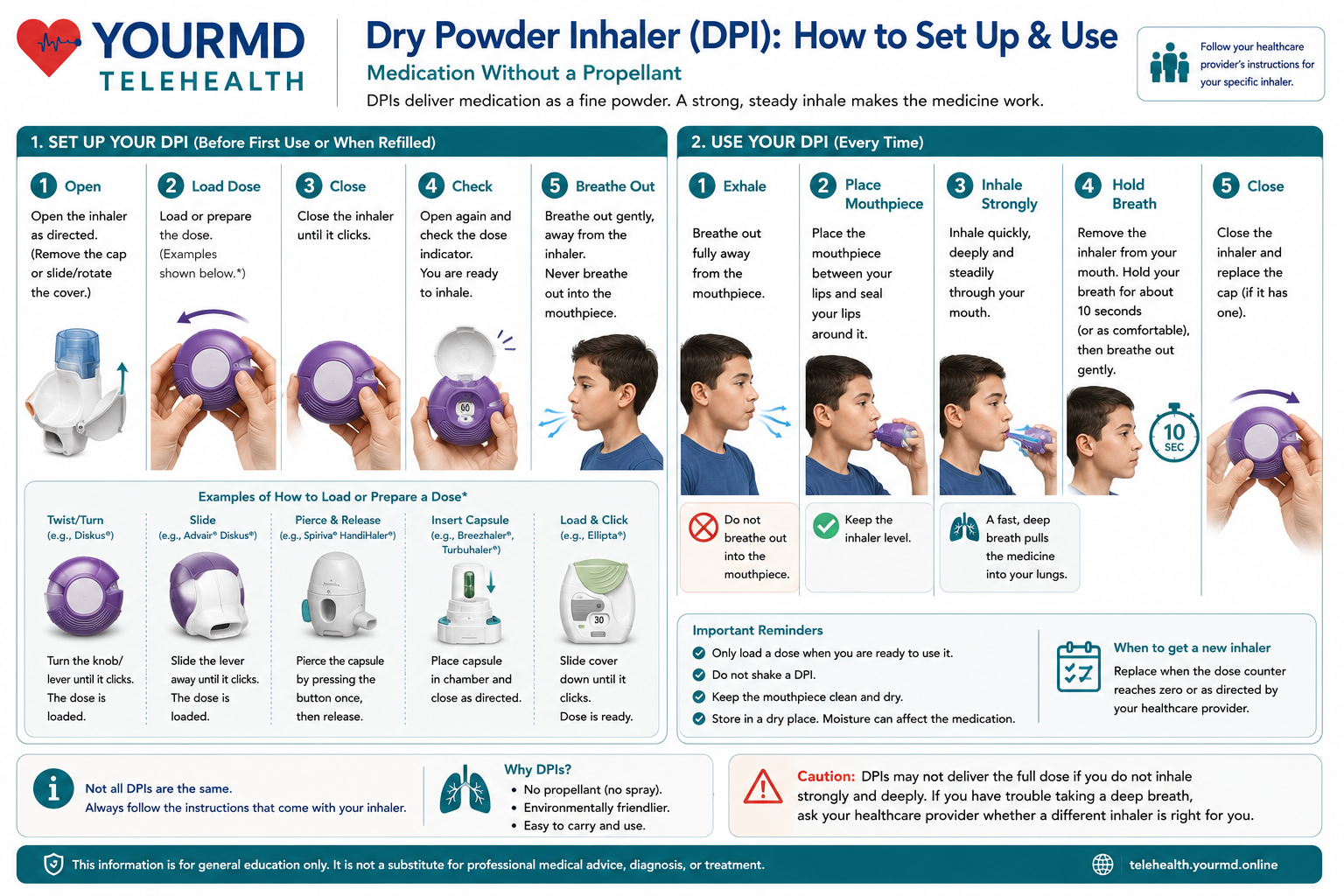
Different inhalers require different techniques. Metered-dose inhalers (MDIs), including many albuterol inhalers, require slow inhalation and coordinating your breath with the medication spray. Dry powder inhalers (DPIs) require a quick, forceful inhalation and no canister press — and unlike an MDI, a DPI should not be shaken. Because techniques differ, always learn the instructions for your specific inhaler.
How Can You Tell If You're Using Your Inhaler Correctly?
Good technique usually means symptoms improve after using your inhaler, you're not tasting large amounts of medication, you aren't coughing immediately after each puff, and your healthcare provider confirms your technique during follow-up visits. Even experienced inhaler users benefit from reviewing their technique periodically.
Frequently Asked Questions
Is using an inhaler incorrectly dangerous?
Usually not, but it can make your medication less effective and leave your asthma poorly controlled.
Should I rinse my mouth afterward?
If you're using a steroid inhaler, rinse your mouth afterward to reduce the risk of oral thrush. For albuterol, rinsing is generally not necessary.
Can children make these mistakes too?
Yes. Children often benefit from using a spacer and having an adult observe their inhaler technique.
Can a pharmacist teach me how to use my inhaler?
Yes. Pharmacists are trained to demonstrate proper inhaler technique and answer questions about your medication.
When Should You Contact Your Healthcare Provider?
Contact your healthcare provider if your inhaler doesn't seem to work as well as it used to, you're using your rescue inhaler more frequently, your symptoms are worsening, you're unsure whether you're using your inhaler correctly, or you continue experiencing wheezing or shortness of breath despite treatment.
Seek Immediate Medical Care If
Call 911 or seek emergency medical care immediately if your inhaler does not improve severe breathing difficulty, you cannot speak in full sentences because of shortness of breath, your lips or fingernails become blue or gray, you develop severe chest tightness that rapidly worsens, or you become confused or difficult to awaken. These symptoms may indicate a life-threatening asthma attack.
The Bottom Line
Even the best asthma medication can't work well if it never reaches your lungs. Small mistakes—such as breathing too quickly, forgetting to shake the inhaler, or skipping a spacer—can significantly reduce how much medicine reaches your airways.
Reviewing your inhaler technique regularly and asking your healthcare provider or pharmacist for a demonstration can make a meaningful difference in your asthma control. If you find yourself relying on your rescue inhaler more often than usual, don't ignore it—your asthma treatment plan may need to be updated.